
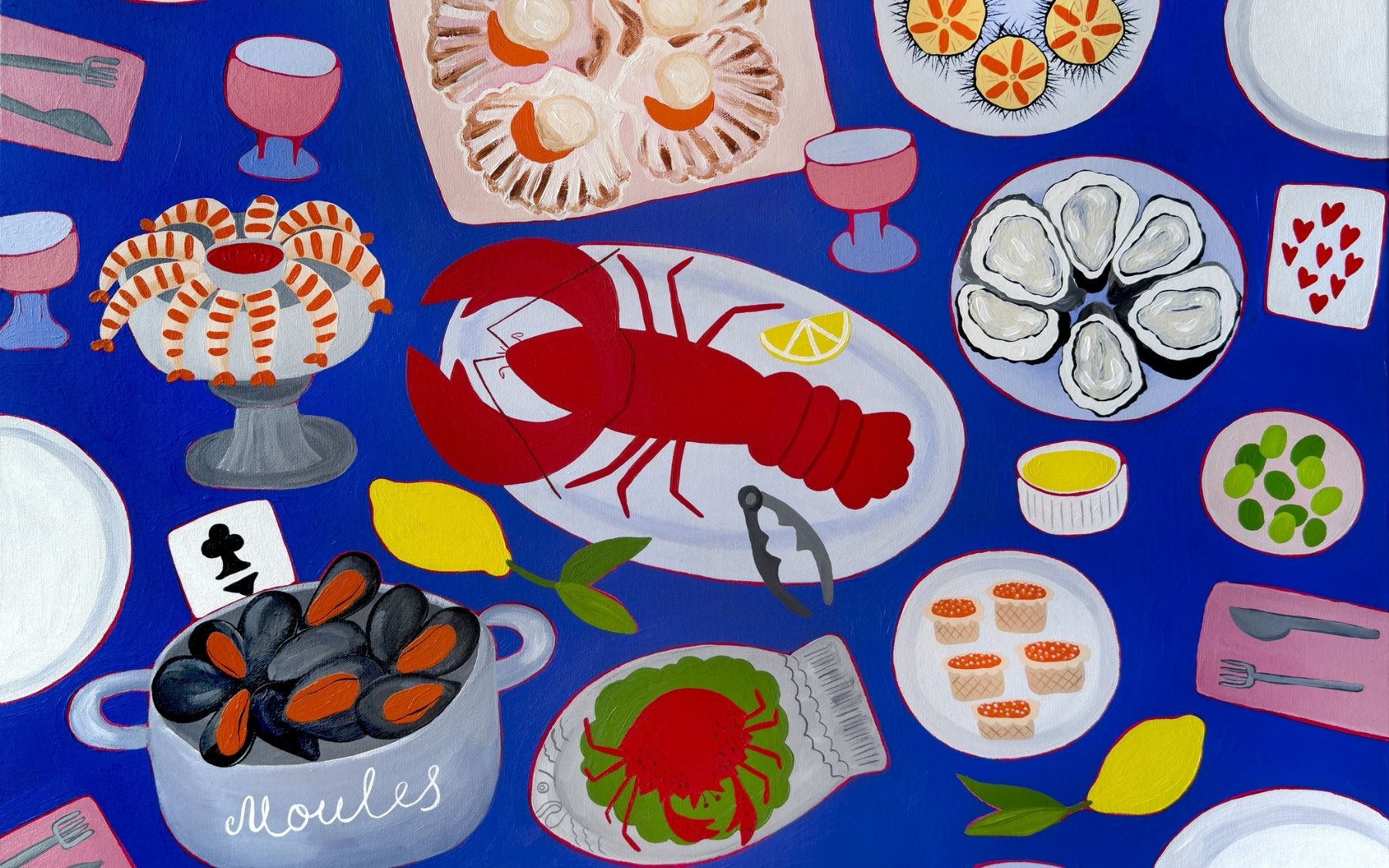
Sonia Markova grew up among canvases and art books, in a household where both parents were artists, and later watched how hard it was for them to make a living from it. Painting became the road not taken: photography and graphic design came first, then magazine work, a safer way to stay close to the creative world without telling personal stories. A move to Portugal, a pandemic, and a period of forced stillness changed the question. The paintings that followed carry the whimsy of childhood book illustration and the rituals of the Portuguese table: a glass of wine, a plate of food, a table set for friends, each given a touch of the dreamy and the imperfect.
✧✧✧
How has your upbringing or cultural heritage shaped the themes and techniques you explore in your art today?
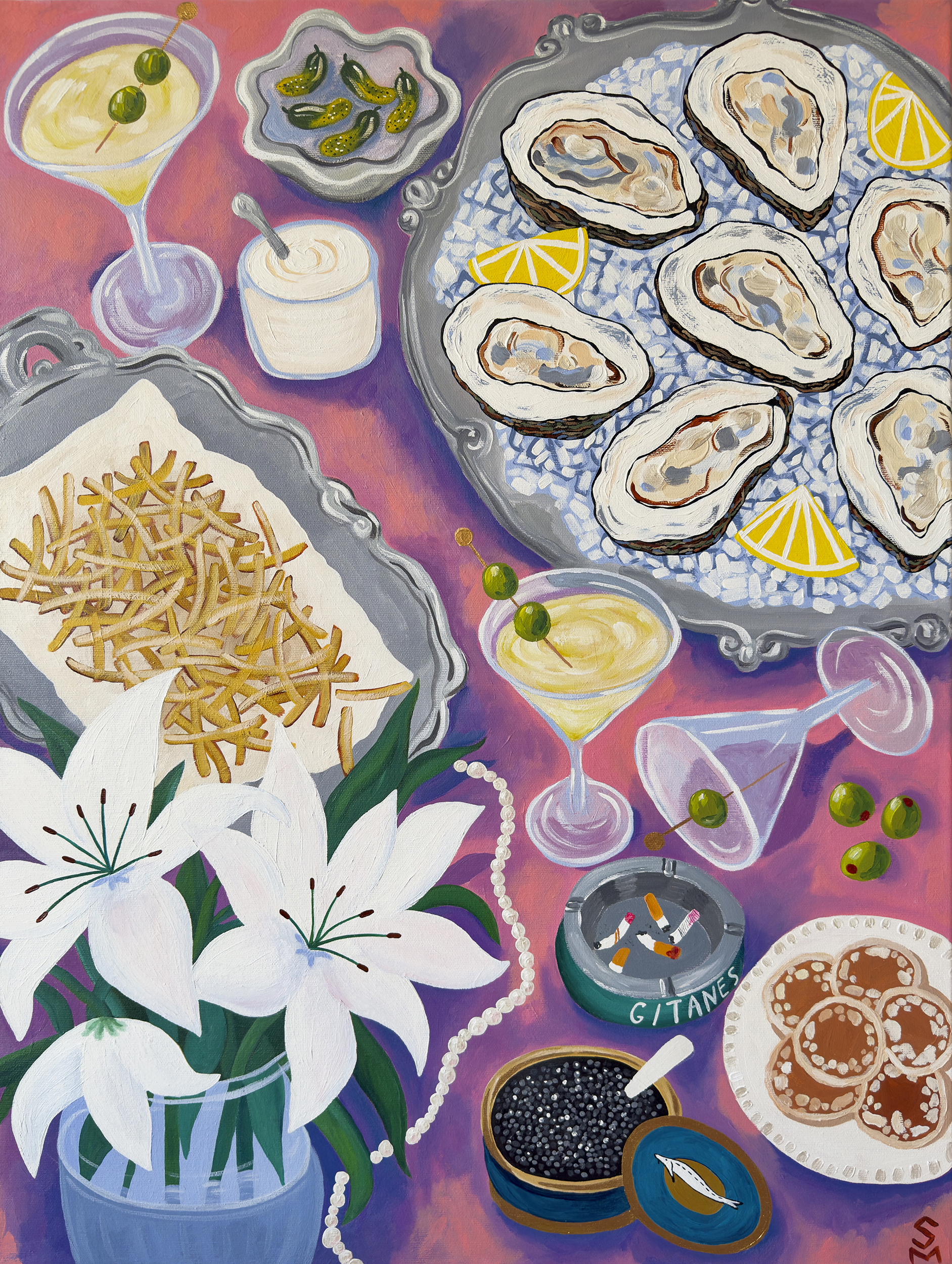
Growing up in a in a pre-computer era one of my great pleasures as a kid (apart from painting) was reading books. I was fascinated by the way stories could come alive in my imagination, and the illustrations that went with them were absolutely crucial to that. They'd create whole worlds in my mind and shaped my early understanding of visual storytelling. To this day, I have a deep affection for children's book illustrations, and I think much of the whimsy, playfulness, and intentional naivety in my work comes from that early influence. I'm drawn to art that doesn't take itself too seriously, where simplicity and imperfection leave room for imagination and emotion. Later in life, moving to Portugal brought another important layer to my artistic identity. I became increasingly inspired by local gastronomic traditions and the everyday rituals surrounding food, drinks, and shared tables. In Portugal these moments are about much more than eating, they represent connection, hospitality, and the pleasure of slowing down and enjoying life. I think those two things just go hand in hand in my paintings. The wonderfully imaginative, almost childlike way of seeing the world and my absolute obsession with the little things in life and the stories they tell. I like to take something very ordinary (a glass of wine, a plate of food, a table set for friends) and give it a touch of the whimsical, of the dreamy. Ultimately it's about the beauty of the everyday, finding the poetry in the mundane and the very fact that you can look at the most ordinary thing and somehow it can be a little bit magical.
Have you ever felt drawn toward a conventional career path? What made you take the "creative leap" despite the risks?
Both of my parents were artists so I was brought up in a very creative environment, surrounded by canvases and drawings and art books. Creativity was absolutely part of my life. At the same time I saw how hard it was for my parents to make a living from art and how they were ultimately forced to abandon it. That experience I think is what made me quite wary of going down the route of painting as a career despite how much I loved it. Instead I chose what seemed like a safer, more conventional path in photography and graphic design. I worked in magazines, which allowed me to stay connected to the creative world while having the stability of a regular job. I enjoyed many aspects of that work, but there were always certain boundaries when it came to personal expression. I was creating, but not necessarily telling my own stories. The real turning point came after a series of major life changes. Moving to Portugal, then the pandemic, led to a period of instability and eventually burnout. It was a period of forced stillness which made me think about all the things that really mattered to me. It made me think a lot about the fragility of life, the sheer unpredictability of it and how easily we can spend our lives putting off the things that actually make us feel alive. At some point, I realised that the risk of trying to become an artist felt much smaller than the regret of never trying at all. I didn't want to wake up one day wondering what might have happened if I had given myself the freedom to do what I truly loved. Of course, choosing art doesn't mean the fears or practical challenges disappear. Having seen my parents' experience, I'm very aware of the uncertainty that comes with a creative career. But I've come to believe that success isn't only about financial stability. It's also about building a life that feels meaningful and true to yourself. And above all else I realised that I had my own stories to tell, my own way of looking at the world and a whole heap of things I wanted to say through my paintings. I owed it to myself to at least give that a chance.
How do you reignite creativity during those inevitable periods of self-doubt or stagnation?
“Don’t let external validation be the source of your creative inspiration" is something I constantly come back to, particularly when I'm feeling a bit doubtful about myself. In a world where social media constantly creates the illusion of recognition (or the lack of it) it’s very easy to lose the point of why we create in the first place. We start to measure our work in terms of likes, comments, sales, people's reactions to it and so on. We forget that the very essence of creativity is the act of creating. For me the feeling of having created something that didn't exist yesterday should be at the very heart of any creative process. There's something quite magical about starting with a blank canvas and gradually watching an idea take shape, often in ways I couldn't have predicted. Of course, as an artist, it's wonderful to receive recognition and know that your work resonates with others. But I've learned that if you depend on external approval to feel inspired, you risk losing the very freedom that is the essence of creativity. When I feel stuck, I try to return to that simple pleasure of making things. I allow myself to experiment, make mistakes, paint something just for fun, without thinking about whether it will be successful, sell, or even be seen by anyone. Sometimes the best way to get over a creative block is to just take the pressure off and remember that not every piece you make has to be something important. I think creativity requires curiosity, a bit of playfulness and a touch of courage in order to produce something imperfect. Often inspiration doesn't come before you start working on it at all, it comes along somewhere in the process.
If you could communicate just one core message through your entire body of work, what would it be?
If I could communicate just one message through my work, it would be to slow down and appreciate the beauty of ordinary life. I think we often get so caught up in chasing bigger things, looking forward to the next achievement or exciting event that we forget how much of our lives is made up of small, seemingly insignificant moments. Yet those are often the moments that stay with us the longest. Through my paintings I want to be celebrating the little everyday things that bring us joy and a sense of connection: a long Sunday lunch with friends, a glass of wine at the end of the day, a full table of food and conversation, a quiet evening at home etc. They may seem like the most mundane of things but to me they have a real poignancy and a real sense of poetry. I'm very much in love with the beauty of the imperfect. I don't think everything has to be perfect or particularly special to be worthwhile. There's a certain beauty in the slightly messy table after dinner, the mismatched glasses, the little things we don't really pay any attention to at all, those are the things that tell the most interesting stories. I hope my paintings will get people to stop and smile and perhaps recognise something in them that's familiar from their own lives, something that will bring back a person, a place, a feeling or a happy memory. Ultimately, I want my art to be a gentle reminder that life doesn't have to be extraordinary to be beautiful. There is so much worth celebrating in the simple act of living.
Do you have any rituals or habits that help you enter a creative state of flow?
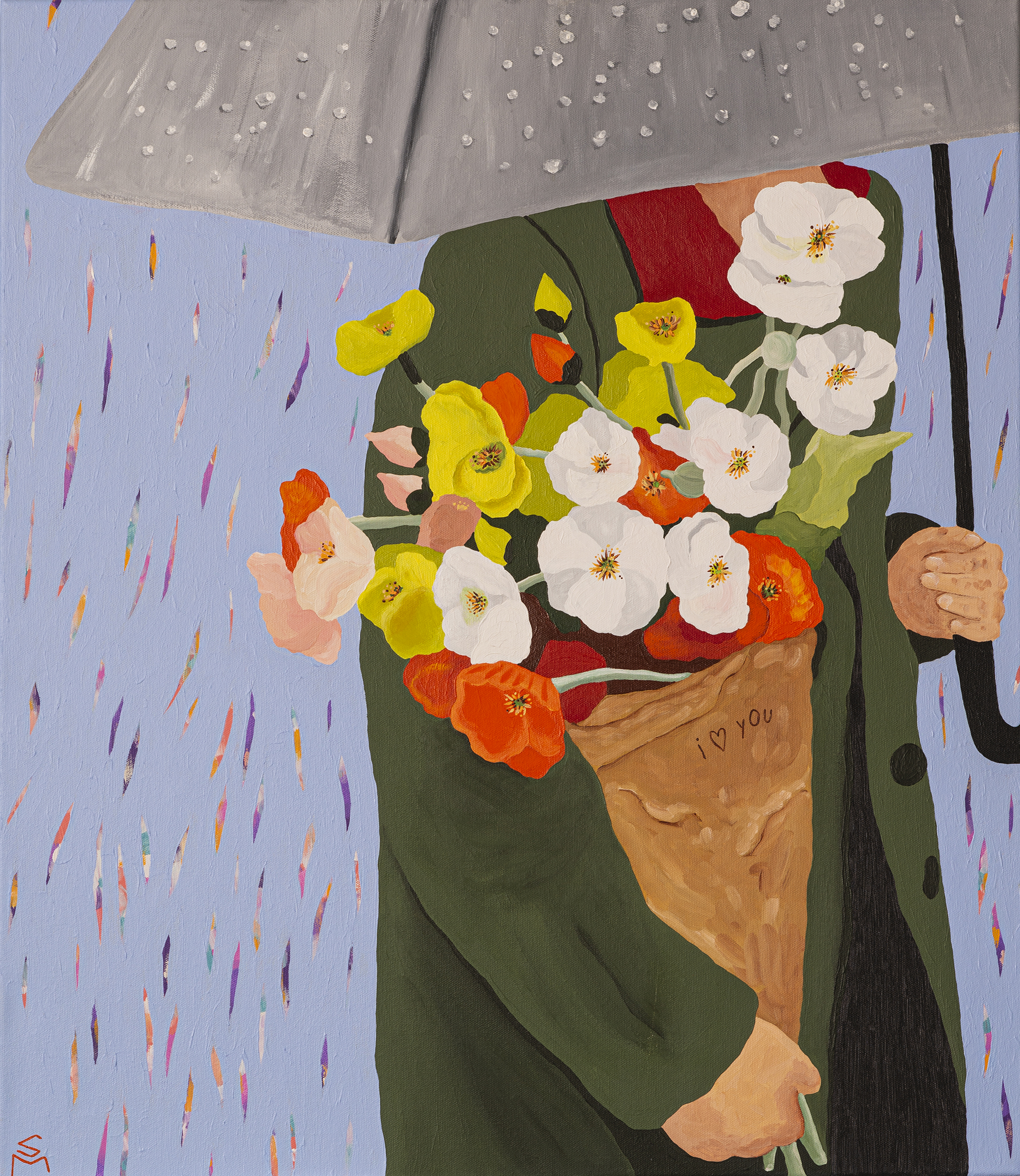
I've learned over time that if I waited for inspiration to strike every time I wanted to paint, I probably wouldn't get much done. Some days I wake up full of ideas and can't wait to get to my brushes, while on other days even looking at a blank canvas feels like a challenge. But I've come to the conclusion that creative flow isn't some mystical state you have to wait for. You can actually train for it. For me, the most important habit is simply showing up. Creativity, like any other skill, grows through repetition, and I believe that the more regularly you practise it, the easier it becomes to enter that state of flow. Of course, not every day is equally productive, and not everything I create turns out the way I imagined, but I've learned to see even those frustrating days as part of the process. A piece that doesn't work can actually teach you more than one that works perfectly. In the end I've learned to just go with the process rather than be hunting around for that one perfect moment of inspiration. The more you create the more you want to create. And, of course, there's one very underrated creative ritual: a good night's sleep. I've discovered that no amount of artistic discipline can compensate for a tired brain. Sometimes the most productive thing you can do for your art is simply go to bed.
How do you feel social media is shaping the way art is created, consumed, and valued today?
Having grown up watching my parents struggle to gain recognition as artists in the 1980s, I feel genuinely grateful for the opportunities social media offers artists today. Back then, reaching an audience often depended on galleries, institutions, or simply knowing the right people. Today an artist can put their work out there and be seen by someone on the other side of the world, can build a community and in fact can make a living from art without having to go down the traditional route at all. That's a massive change and one we shouldn't be in any way underestimating. At the same time, I believe this accessibility comes with its own challenges. The amount of visual noise we are exposed to every day is overwhelming. As artists, we're constantly seeing what others are creating, how successful they appear to be, and what seems to attract the most attention. It's very easy to fall into the trap of comparison and, perhaps without even noticing, start making creative decisions based on what performs well rather than what genuinely interests us. I think the same applies to the audience. Social media has made art more accessible than ever, which is wonderful, but it has also accelerated the way we consume it. We scroll past hundreds of images in minutes, often giving each one only a second of attention, art risks becoming just another piece of content, judged by how quickly it catches the eye rather than how deeply it makes us feel. There's also the question of trends. When certain styles become popular, we start seeing similar images everywhere, and while there's nothing wrong with being inspired by what's happening around us, I sometimes worry that both artists and collectors can lose touch with their own instincts. Artists may feel pressured to create what's commercially appealing, while buyers might follow what's fashionable instead of choosing something that genuinely speaks to them. Personally, I try to see social media as a tool rather than a compass. It's a wonderful way to connect with people, share my process, and find homes for my paintings, but I don't want algorithms to dictate what I create. I think it's important to leave room for experimentation, even when the result might not be particularly popular online. I hope that despite all the noise, we don't forget that art is a deeply personal experience, its value can't be measured entirely in likes, views or even sales. Sometimes the most meaningful connection happens when just one person looks at a painting and feels something they can't quite explain. To me that's worth far more than going viral.
Can art be truly therapeutic? Have you experienced its healing power personally, or seen it impact others?
Absolutely. I believe that creating something with our hands has always been one of the most natural ways for people to find comfort, process emotions, and reconnect with themselves. If we look back, creativity used to be a much more ordinary part of everyday life. People would spend their evenings knitting, embroidering, carving wood, sewing, or making things for their homes. Of course, many of these activities were born out of necessity, but a lot of it was also about the sheer pleasure of doing it, of being completely immersed in the process and seeing the result of your own hands. Today with television, social media and endless forms of passive entertainment, I feel we've gradually lost some of that connection. Creating has become something we often label as a hobby, a special talent, or even a luxury reserved for people who have enough free time. But I don't think creativity should be seen as something separate from ordinary life, it's a fundamental human instinct, and we all have it in one form or another. I've experienced this myself quite often: there are days when my mind is full of worries or doubts, but once I become absorbed in mixing colours and moving a brush across the canvas, everything else seems to quiet down. It's not necessarily about expressing a particular emotion or creating something meaningful. Sometimes the simple act of making something is enough to bring you back into the present moment. I also think there's something deeply reassuring about allowing yourself to create without the pressure of being good at it. We live in a world where almost everything seems to be measured by productivity, achievement or results. Art offers a rare opportunity to do something simply for the pleasure of doing it, to experiment, make mistakes, and enjoy the process without needing to justify its value. And I think that's where much of its therapeutic power lies. Not every creative act needs to produce a masterpiece, become a business, or even be shown to anyone, sometimes making something with your hands is simply a way of taking care of yourself.
If you could step back into any artistic era, which would it be and why?
I would choose the era of Impressionism, particularly the second half of the 19th century. What fascinates me most about that period is how radically the understanding of art was beginning to change, partly in response to the invention of photography. For centuries one of the fundamental roles of painting had been to depict the visible world. All of a sudden you had photography as a completely different way of capturing reality. It's absolutely fascinating the way that has prompted artists to then ask themselves what painting could be if it wasn't simply a reproduction of what we see. The Impressionists were all about light, colour, movement and the ephemeral quality of the everyday, they abandoned the strict rules of academic painting, took their easels out into the open air, were perfectly happy with visible brushwork and began to regard the ordinary as a subject in itself. A café, a garden, people having their lunch were all things that could be made extraordinary on canvas. I would have loved to witness that shift in artistic thinking, especially the courage it took to challenge established ideas of what art was supposed to look like. What we now consider beautiful and revolutionary was often criticised or dismissed at the time. There's something incredibly inspiring about artists who were willing to trust their own vision before the world was ready to appreciate it. Perhaps it's the sheer freedom to interpret rather than simply reproduce that has stuck with me from that period. Having come from a background in photography, the relationship between the two is one I find very interesting. Photography taught me to look at the world, painting has given me the freedom to re-invent it. To go beyond what's there, to exaggerate the colour, to simplify the form, to accept the imperfect, to express the feeling of the moment rather than the actual appearance of it. And of course I wouldn't mind an afternoon in a Parisian café, surrounded by artists arguing about the future of painting (with a good glass of wine if possible).
What are your long-term aspirations as an artist, both personally and professionally?
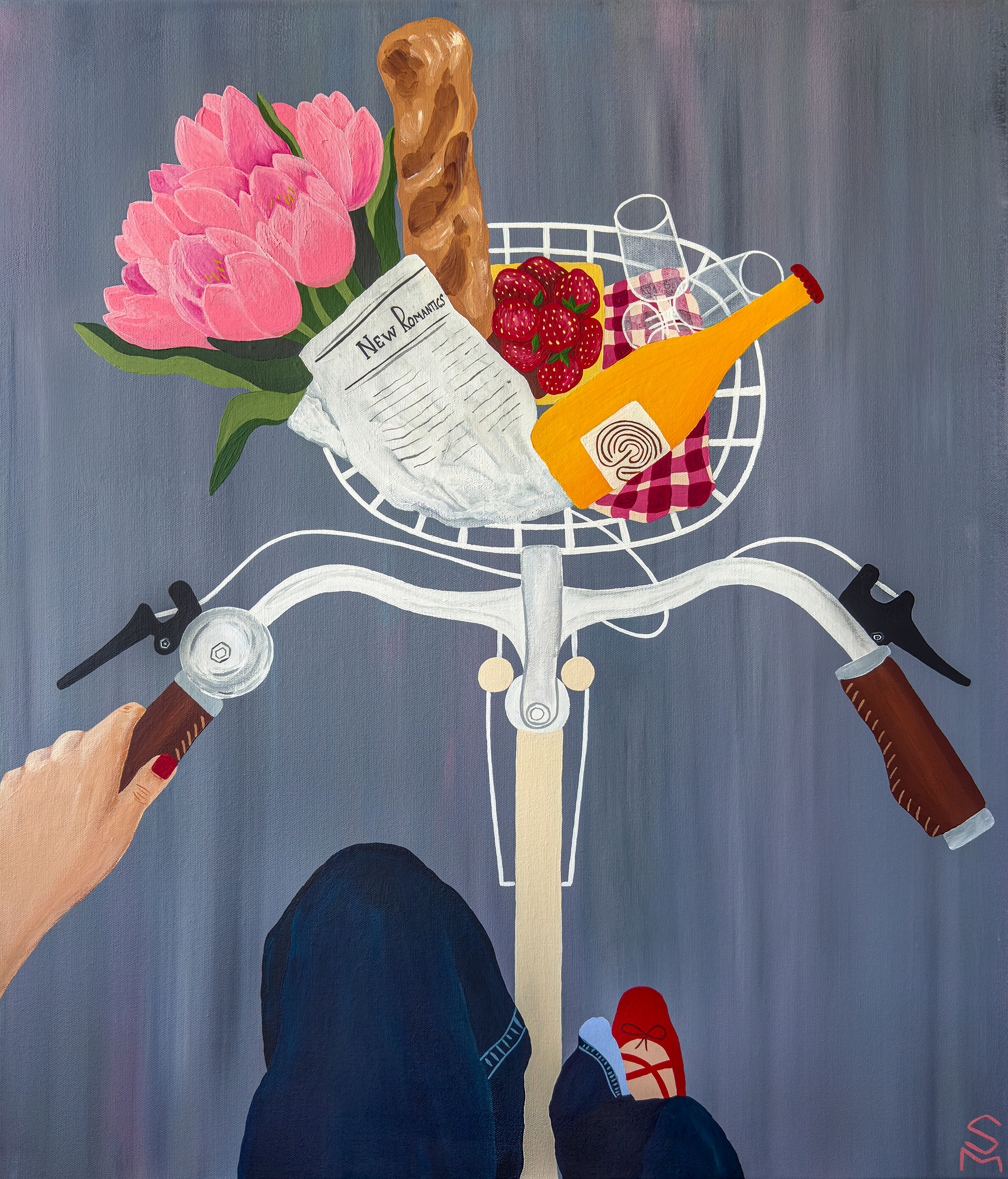
I think my biggest aspiration is actually quite simple: to keep creating art that brings joy to people's lives. There's something incredibly rewarding about knowing that someone has chosen a painting of mine to become part of their home, their everyday surroundings, and perhaps even their personal memories. That to me is the most wonderful form of validation an artist could possibly get. On a personal level I'd like to keep on building a life that is in some way reflective of the values I'm trying to express in my work, i.e. the value of slowing down, the value of small things, the value of curiosity and the value of finding beauty in the everyday. I don't want to be so focused on the next thing to achieve that we've completely lost the enjoyment of the journey itself. It would be rather ironic really to be writing about slow living and yet to be living a life that is absolutely full of haste. Professionally I'd like to reach a wider audience, get more collectors and have my work in different parts of the world. I'd also love to continue to experiment and develop as an artist, without in any way losing the playfulness, the spontaneity and the very personal voice that is at the heart of my work. Ultimately I want my art to be a visual pause in a world that doesn't really stop. A gentle nudge to look at the beauty in the mundane, to find the meaning in the everyday, to accept the imperfection of life and to simply enjoy it with a bit of warmth, a bit of colour and a touch of poetry. If my paintings can get someone to smile on a normal Tuesday, take them back to a happy memory or just make them appreciate life a bit more I think that's a pretty good definition of success.
✦ ✦ ✦
Sonia Markova wants the work to be a visual pause in a world that does not stop. The mismatched glasses, the slightly messy table after dinner, the long Sunday lunch: these are treated as the moments that stay longest and tell the most interesting stories. Photography taught how to look at the world, and painting gave the freedom to reinvent it, to exaggerate colour, simplify form, and accept imperfection. Creative flow, in this practice, is trained by showing up rather than waiting for inspiration, and external validation is never allowed to become its source. If a painting makes someone smile on a normal Tuesday, success has been reached.