
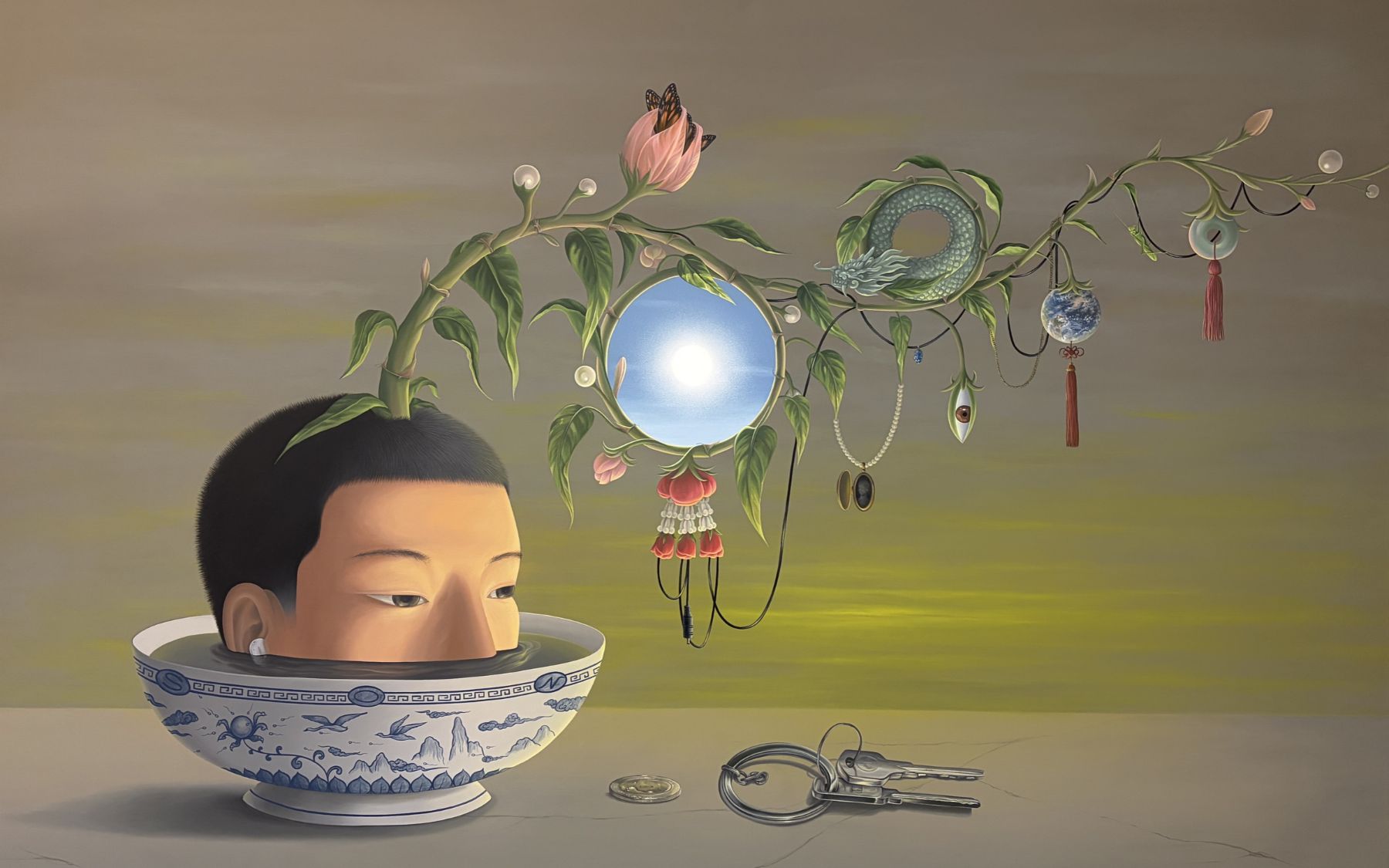
Gongkan asks whether the things witnessed and experienced are really the way they should be. That question, social and philosophical in equal measure, sits underneath a practice that has grown more personal and more intimate over time. What began as a search for freedom, a wish to shout out and show the world how it looks from one particular place, has settled into smaller, quieter ideas that carry deeper meaning. The work comes from honest looking and a refusal to pretend, and from a conviction that being human cannot be fixed into any single definition.
✧✧✧
How has your upbringing or cultural heritage shaped the themes and techniques you explore in your art today?
I think the experiences I've had, the things that have shaped who I am, and certain events in my life have led me to question things on both a social and philosophical level. I often find myself asking whether the things I experience or witness are really the way they should be.
Do you believe an artist's passion is something destined or a conscious choice?
I think it's something we choose. It starts with liking something and wanting to do it well, to bring it to life in the way we envision it. It's an ambition to keep improving our work as we grow and move through different stages of life.
If you could communicate just one core message through your entire body of work, what would it be?
I'd like to communicate the idea of being human. As living beings, we shouldn't have to be defined or limited by anything. Society often shapes us into believing that we need to know exactly who we are or that we must eventually become something in particular. But I don't think we need to be anything at all. As humans, we can change and adapt to the world around us. We don't have to fit into any fixed definition.
How has your artistic style transformed over the years? Are there specific influences, experiments, or moments that marked a turning point?
I think age has played a big role in shaping my work. When I first started out as a young artist, I was searching for freedom and exploring broad ideas. It was almost as if I wanted to shout out and show people how I saw the world. But as I've grown older, my work has become more personal. I find myself drawn to smaller, more intimate ideas that carry a deeper meaning. They're like little things that, when expressed, somehow feel genuinely real.
How do you reignite creativity during those inevitable periods of self-doubt or stagnation?
To be honest, I do have moments of self-doubt. But often, what brings my inspiration back is simply my love for making art. It's something I genuinely love. I also try to be honest with myself about what I want to create and what I want to express. When we're not pretending or forcing ourselves to be someone we're not, we naturally want to keep creating.
How do you feel social media is shaping the way art is created, consumed, and valued today?
Social media is a great way to share art and make it visible to a wider audience. It allows us to reach people from all walks of life, not just those who are already interested in art or who would visit a museum to see it.
How do you challenge yourself to continually grow as an artist while remaining true to your voice?
It's very difficult. I agree with the idea that perhaps a fixed sense of self never really existed in the first place. We're shaped by a combination of the things we like and the things we experience. So I think when I become deeply interested in something or really love something, my work naturally begins to reflect it. Whether that counts as being true to myself is another question.
What are your long-term aspirations as an artist, both personally and professionally
I want my art to touch the hearts of many people, bring about change in some way, and share my ideas with others. But I also want to keep reminding myself to find happiness in everyday life. As I've grown older, I've realized that happiness is the most important thing to hold on to.
✦ ✦ ✦
Gongkan describes doubt openly, and finds the way back to the work through a plain love of making. Honesty is the method: when nothing is forced and no one is being imitated, the wish to keep creating returns by itself. The ambitions ahead are generous and unguarded: to touch the hearts of many people, to bring about change in some way, and to share ideas widely, while holding on to happiness in everyday life as the thing that matters most. The idea of a fixed self may never have existed, and the work seems comfortable with that. It keeps changing, adapting, and returning to the small things that feel genuinely real.