
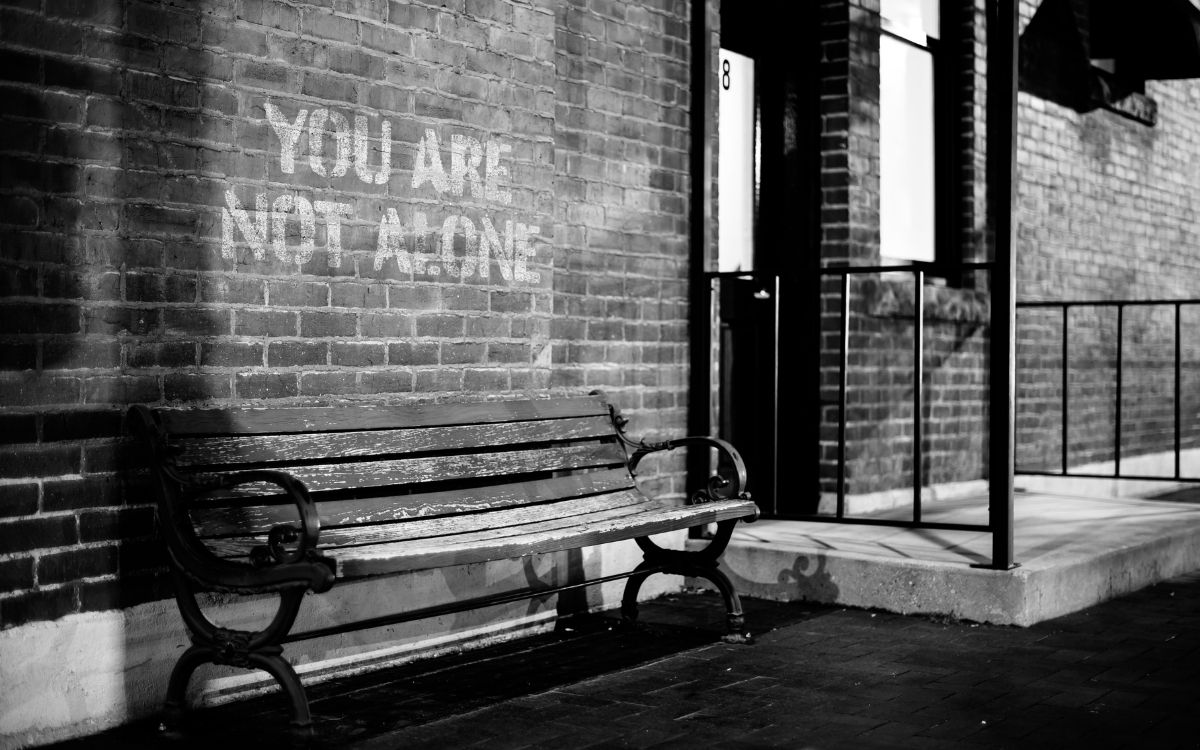
What do you do when the thing keeping someone stable disappears at the exact moment they need it most?
For a lot of young people already living with anxiety, depression, or the early edges of a mental health condition, that's not a rhetorical question. It's what happened. Routines vanished overnight. Friendships thinned out to a chat window. And the handful of adults trained to notice when someone was struggling, youth workers, counsellors, the people who usually catch it early, suddenly couldn't be in the same room either.
The cruelty of the timing is easy to miss if you weren't looking closely. Isolation is exactly the condition mental health support is built to interrupt, and isolation is exactly what got forced on everyone at once. The support didn't stop being needed. It just stopped being deliverable the way it had always been delivered.
A Method Built on Being in the Room
Art-based approaches to mental wellbeing lean especially hard on physical presence. A therapist reads posture, hesitation, the pressure of a pencil on paper, in ways a phone call simply can't capture. Materials get shared, passed across a table, picked up and put back down. None of that survives a video call unchanged, and a lot of practitioners spent the first months of lockdown just trying to figure out what, if anything, still worked once the room was gone.
Most didn't have a manual for this. The skills that made someone good at reading a young person across a table didn't automatically translate into reading the same person through a laggy fifteen-inch rectangle, and nobody had exactly been trained for that gap.
Learning to Read a Different Kind of Room
Picture a youth worker, call her Carla, running her first art session over a video call, one of maybe six young people on a shared screen, all muted by default.
"I couldn't tell who was actually drawing and who'd just put the tablet down," she says. "On paper, in a room, you always know."
She adapted, eventually, by asking the group to narrate what they were making out loud, turning silence into information instead of a gap she couldn't read.
That small workaround says more than it sounds like it does. The instinct behind art therapy, using creation instead of conversation to reach a feeling nobody can quite name yet, didn't need to change. What needed rebuilding was everything around it: how you notice, how you check in, how you know someone's actually still there on the other end of the call.
Who Gets Left Behind When Everyone Improvises
Individual practitioners figuring this out alone, session by session, works up to a point. What it doesn't do well is reach the professional who's never used a shared digital whiteboard, the small youth organisation without a training budget, or the frontline worker too stretched to experiment their way through a new method on the fly. Improvisation travels badly. It stays wherever the person who invented it happens to be working.
Not Left to Chance
This is the gap a project called ARTY is trying to close, co-funded by the European Union. ARTY is working across Greece, Italy, Spain, Cyprus, and Romania to give youth workers, psychologists, and social workers an actual, shared way to keep using art as a tool for mental wellbeing when in-person contact isn't possible. Alongside it sits a practical guide connecting creativity to mental health support, and a separate resource aimed at raising awareness of exactly how hard the pandemic period hit young people already carrying a mental health condition.
None of it replaces the room. What it offers instead is smaller and more useful: a way for the next Carla to walk into a video call already knowing how to read it. The room didn't have to come back for the support to matter again. It just needed someone to work out how to fit it through a screen.