
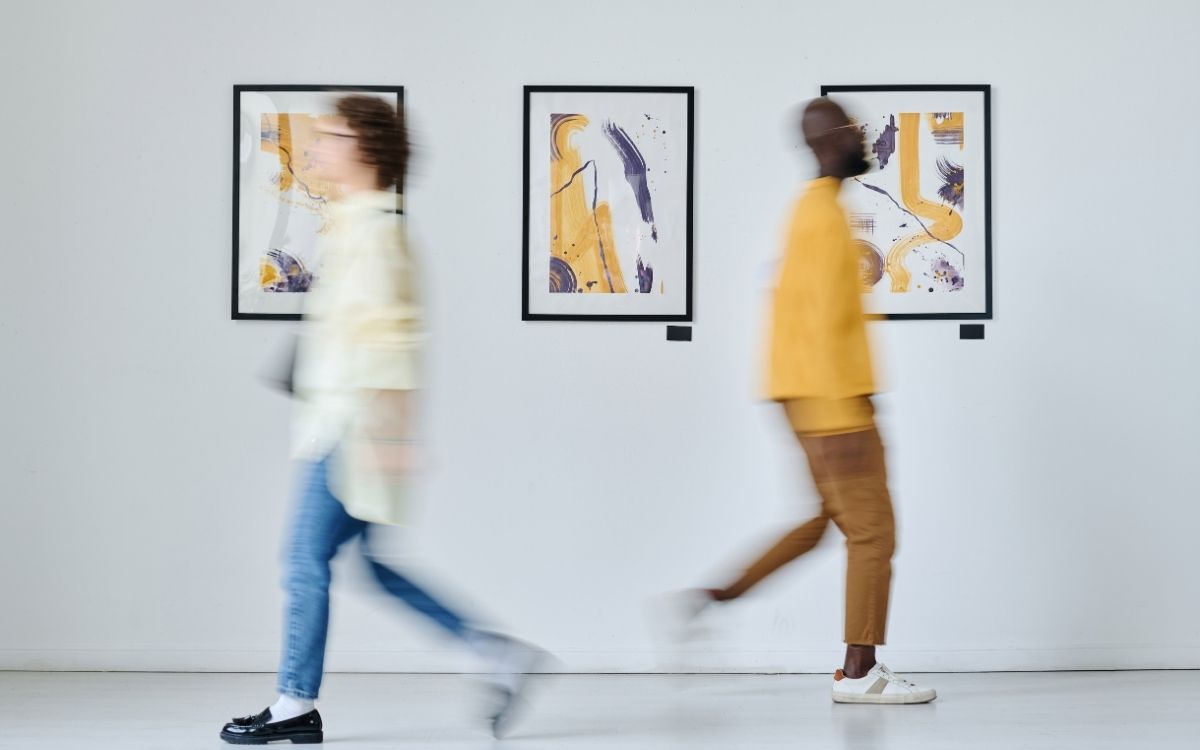
What happens to a piece of art made in a workshop nobody outside the room ever sees?
Most of it stays there; a photo on someone's phone, maybe a wall in a community center, and then nothing. The audience that could actually be changed by it never gets the chance to look.
That's the gap a virtual exhibition set out to close, built entirely from work made by young people with migrant backgrounds who'd spent months learning to paint, photograph, and build installations in creative spaces designed as safe rooms for intercultural exchange. The workshops gave them the skills and the space to make something honest. The exhibition was the part that let anyone else actually see it.
It's called "We and They: United by Diversity", a title that argues with itself on purpose. The whole premise of the show is that the line between "we" and "they" is exactly what falls apart once you're standing in front of someone else's work, trying to understand what they were feeling when they made it.
A Room With No Walls
The gallery lives entirely online, built as a navigable 3-D space rather than a static image gallery, something closer to walking through an exhibition than scrolling past one. Artists between 16 and 30, trained through earlier stages of the project, get to hang their own work here and pair it with their own words: what the piece means, what it's responding to, what they want someone looking at it to understand about their life that a caption alone couldn't carry.
That combination matters. A painting can say a great deal on its own, but pairing it with the artist's own account of their reality, in their own voice, not translated through someone else's summary, closes a gap that pure visual art tends to leave open for misreading.
Talking Back to the Work
The exhibition doesn't stop at display. Built into the platform are interactive forums where visitors and artists can respond directly to individual pieces, not with a like or a star rating, but with an actual exchange. A stranger looking at a piece can ask what it means. The artist can answer. Someone else can add what the same image brought up for them, from a completely different life.
That's a deliberate departure from how most art gets consumed online, where looking rarely turns into talking. Here, the point of putting the work up in the first place is to get people — most of whom will never meet, actually responding to each other through it.
Beyond the Gallery Walls
The exhibition was built to reach further than the artists who made it. Every visitor who spends time with the work and the conversation around it is, in a small way, part of the intercultural dialogue the whole project is trying to build, not because they attended a lecture on tolerance, but because they sat with someone else's story long enough to respond to it honestly.
For the artists, putting their own work and their own account of their life in front of strangers isn't just exposure. It's a chance to be heard on their own terms, and to see their own experience reflected back through how other people respond to it, sometimes recognition, sometimes a perspective they hadn't considered.
Built to Outlast Its Own Deadline
Most exhibitions close. This one is built with the opposite intention: artists who've already shown their work are being asked to bring in others, so the gallery keeps growing after this phase ends rather than freezing in place. A digital space is easy to leave open; the harder part is making sure someone keeps walking through the door.
There's something fitting about a platform built on the idea that "we" and "they" collapse under close attention, designed to keep expanding on its own rather than closing once the spotlight moves elsewhere.
This exhibition grew out of Art Hubs for Youth, co-funded by the European Union's Erasmus+ programme, which backs creative approaches to intercultural dialogue and inclusion for young people with migrant and non-migrant backgrounds across Europe.