
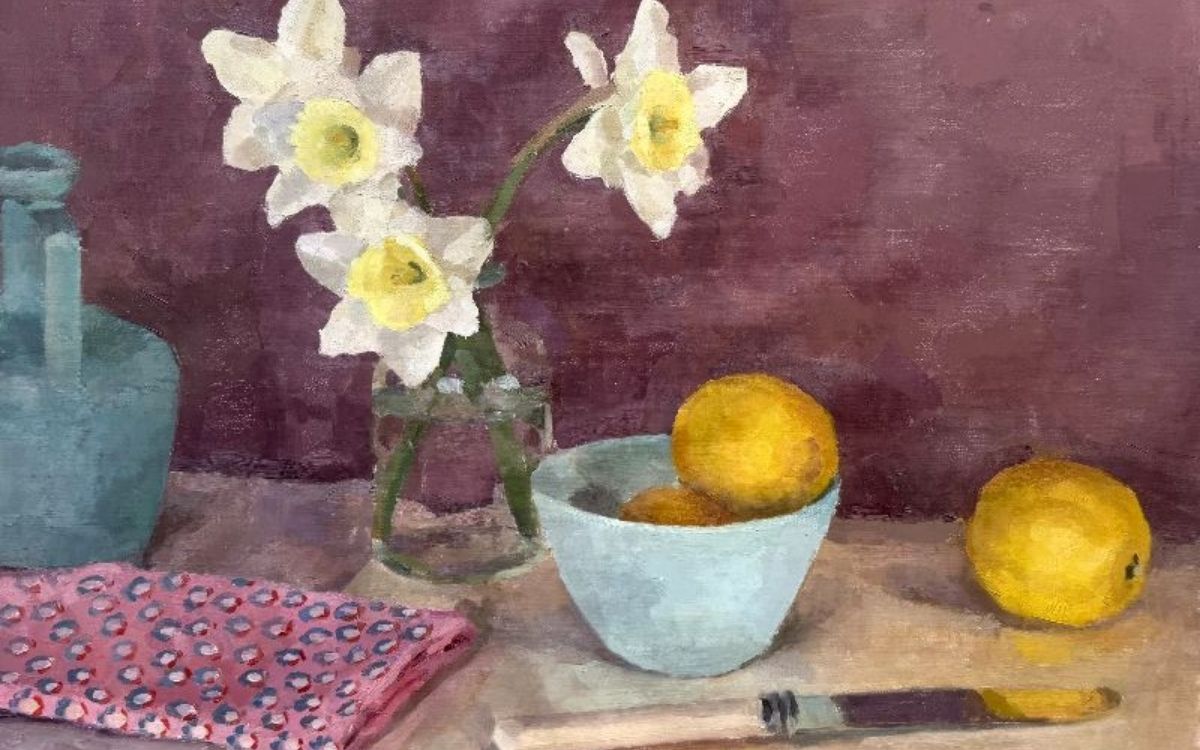
Caroline Gray came to painting through a deliberate choice, turning away from a conventional career to pursue the techniques that would make a creative life sustainable. Discipline sits at the center of the practice, not as a constraint on creativity but as the condition that allows it to flourish. Working primarily in oil, Gray moves fluidly between painting from life and from photographs, finding in direct observation something close to meditation. What follows is a conversation about craft, consistency, and the quiet confidence of an artist who has built a practice on solid ground.
How do you reconcile the tension between raw, innate creativity and the discipline required to master your craft?
It’s definitely a balance, but I think they both feed into each other. If you want to make a life as an artist, to me discipline is the most important thing. You cannot survive on creativity alone - you have to be dedicated to going into the studio and working on your skills. With the dedication to the craft, your ability to be more creative in the studio will be nurtured.
Have you ever felt drawn toward a conventional career path? What made you take the "creative leap" despite the risks?
Yes, in college I was definitely drawn to a more traditional career path. Then I realized I couldn’t spend my days behind a computer in an office. I had always been artistic… After college, I was torn between going to art school or culinary school and I chose the former. I decided to make the creative leap when I found a school that could really teach me the techniques of painting. I thought if I learned how to really paint, at the very least I could rely on commissions. Fortunately, I have found that people connect with my personal work and I don’t have to solely rely on commissions.
How do you reignite creativity during those inevitable periods of self-doubt or stagnation?
The biggest thing when I am going through a creative block is to continue to show up to the studio and paint through the block. I don’t put any pressure on myself to make something great. I paint until something clicks and that creative spark eventually comes back. I typically paint from life when the blocks happen - a simple still life - nothing too involved. I want a subject to get my hand mixing paint and back in the groove of painting.
How do you challenge yourself to continually grow as an artist while remaining true to your voice?
I try to always take some type of continuing ed class whether it’s online or in person. I love taking a class with an artist I admire - you learn a lot and you can decide what tools and ideas you want to take home with you and incorporate into your studio practice. Additionally, it is nice to take these classes because then you are surrounded by other artists. You learn from them as well as the teacher. Connecting and communicating about art with other artists always helps you grow as an artist.
Do you have any rituals or habits that help you enter a creative state of flow?
I oscillate between working from life and from photos. If I find that I am having a hard time staying in a painting/creative flow, I will usually switch to painting from life. There is something about intensely observing from life that is almost meditative and instantly gets me back into the flow of painting. Also, sometimes I will switch up mediums from oil paint. I will take out my watercolor and paint a little looser. More recently, I have picked up oil pastels, which I find incredibly fun. Changing up mediums from my go to (oil paint) gets me out of my head or relieves the pressure to make something worthwhile. For some reason, the stakes are lowered when I am creating with watercolor or oil pastels.
How do you feel social media is shaping the way art is created, consumed, and valued today?
As with most things, there are pros and cons… Social media has been great for sharing your work and directly connecting with people who enjoy and want to collect your artwork. However, it has also pushed artists to make a brand of themselves and their artwork, which is distracting from the actual work. Also, the unrelenting pressure to have a presence and post new work on social media can grind on me from time to time. However, I conduct a substantial portion of my business on instagram and it has afforded me a lot as an artist.
Can art be truly therapeutic? Have you experienced its healing power personally, or seen it impact others?
Yes, making art is incredibly therapeutic. I know for myself, painting helps me get out of my head. I can be an overthinker and painting has an immediacy to it that can subdue my other thinking nature. Anything where I can use my hands and create something from nothing definitely calms me. Also, I teach classes and I have seen first hand how making art can help people work through hard times.
Artificial Intelligence is increasingly infiltrating creative fields. Do you see artificial intelligence as a threat, a tool, or a collaborator in the art world?
With the way I create and connect with art, I don’t see AI as a threat. I think as the world becomes more automated and disconnected from humanity, work made by humans with their own two hands will become even more desirable. The most interesting thing about art is the human aspect of it. A perfectly rendered “painting” made by AI loses all interest to me and I would lose my desired audience.
If you had the chance to sit down with any creative mind from history, who would it be and what would you ask?
It would probably be Jean Baptiste-Camille Corot and I would ask him everything he knows about landscape painting - the colors he uses, what’s most important in a landscape painting, how to paint clouds etc..
Have you considered teaching your artistic skills to others? What excites or challenges you about that?
Yes, I currently teach private lessons and would love to teach more. I enjoy sharing my knowledge about painting and I find it inspiring to help others with their artistic practice. Also challenges me to keep studying the art of painting and not get apathetic about my own practice.
What comes through most clearly in this conversation with Caroline Gray is a straightforward and hard-won pragmatism. There are no grand statements about art's higher purpose, only a steady commitment to showing up, working through the block, switching mediums when necessary, and continuing to learn. Teaching has become a natural extension of that commitment, a way of staying honest about the craft while helping others find their own footing in it. In a world increasingly shaped by automation and AI, Gray remains quietly confident: work made by human hands, with genuine feeling and earned skill, will always find its audience.