
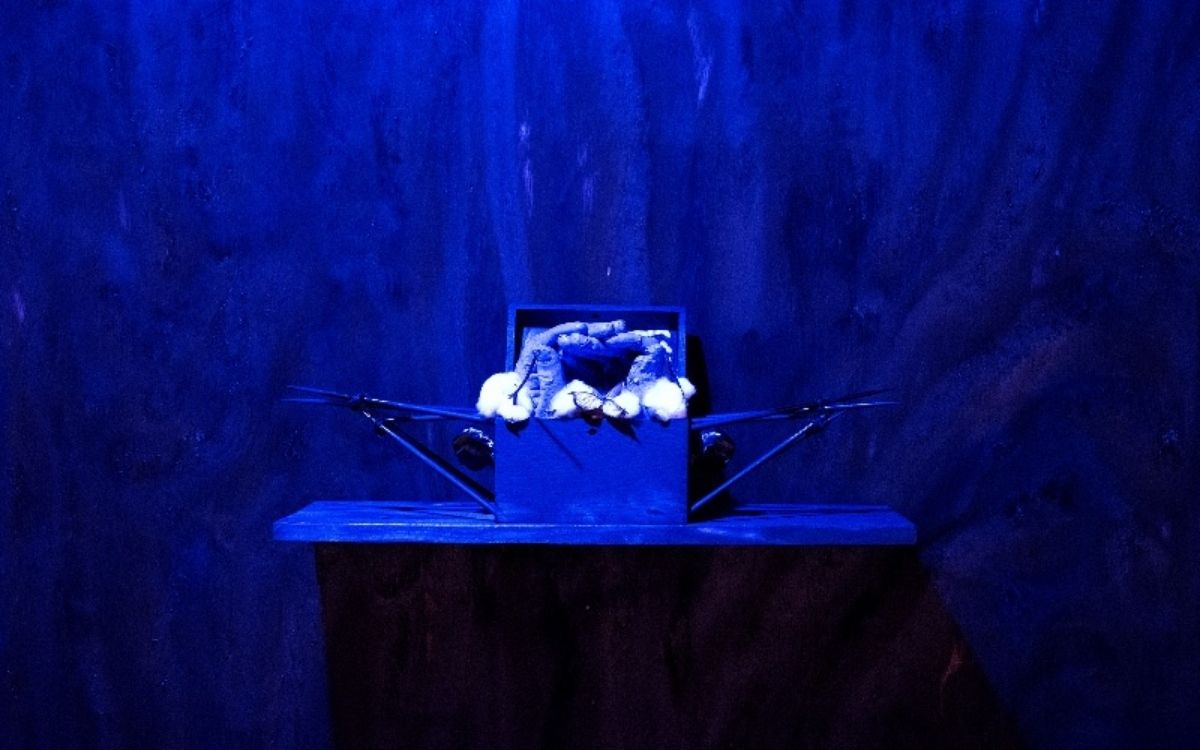
Austin G. Reynolds makes work rooted in ancestry, memory, and the Yoruba tradition of veneration that connects the living to those who came before. Drawing on family records, census documents, and the spiritual language of the Orishas, Reynolds builds a practice that treats each piece as an offering, a form of communication with lineage that history has too often hidden or erased. Materials like gold, glass, and laser-etched wood carry both adornment and weight, honoring beauty alongside the gruesome truths of the African diaspora. What follows is a conversation about spirituality, ethics, and the responsibility of representing histories that demand to be remembered.
How has your upbringing or cultural heritage shaped the themes and techniques you explore in your art today?
Ancestrally speaking, my identity will always be tied to a history that runs deeper than blood and the physical culture of the world, so my practice reflects the African American histories I was never taught or were hidden. I can say the physical appears in moments of adornment, such as gold or glass, which act as riches denied through enslavement. The spiritual is found in quiet moments when viewers can reflect on familial lineage etched into wood, or ancestral bodies simplified in paint with moons as symbols of time. The African diaspora has a deep and daunting history, but I do not shy away from showing its beauty and pain. The theory that lives within my work, honoring those who come before, and remembering what is passed down, ultimately influences the material culture and technical quality shown within my practice.
Does spirituality or a connection to something larger than yourself influence your creative process?
Spirituality is a pertinent tool in my artistic endeavor, specifically the Yoruba practice. In my artistic practice, reverence for ancestors and Orishas is important. Each work of art is an offering in itself, and a tool for understanding my own familial journey in the United States from past to present. I have always firmly believed that we are the offspring of what has come before, and the Yoruba beliefs reflect this through continual communication and veneration of the ancestors, for they guide our paths. My artistic practice is meditative, a means of ancestral communication. Whether it is breaking a bottle, layering paints, or manipulating files for 3D printing, the ancestral lives within the spiritual and physical provide life for each object.
Have you ever struggled with the ethics of your art—such as who it represents or who it impacts?
My art not only challenges the idea of Western religion in many ways but also challenges history in our interaction with untold truths. I am undoubtedly representing the African diaspora, but the work can be seen as a finger pointed toward groups who have historically oppressed other races. That reaction is one I cannot or will not apologize for. My goal is to bring awareness to the history of African and African-American people who have lived for centuries, no matter how gruesome. It would be remiss for me or my practice to appease the dead by softening the aim of my practice when it is all based on historical truths.
Describe a piece you’ve created that has held the most emotional weight for you. What makes it significant?
In the last year of my MFA program at Winthrop University, I created a pentaptych titled The Bell-Gregg Connection. For the first four panels, my family tree is etched, the 1880 census record, and census records showing familial names. The very last panel, laser-etched with familial history, shows my portrait turned away from the viewer, almost in somber quietness. A large part of what makes this piece special is the access to such records. It is not uncommon for African descendants of the slave trade to not have familial histories in writing. My work is a process of reconnecting with ancestors and understanding how they live within. Although this is only my maternal history, this work presents a unique connection between the living and the dead.
Is art created for the artist, the audience, or somewhere in between?
I believe there is a healthy medium to this, but there is no right or wrong. Art is about perspective, and when we share a lived experience, we create a connection point for our viewers. An artist releasing into the world a moment in time is a beautiful possibility to reshape the course of human history. There is a function to how we present art, and each function can exist in tandem or separately. When we choose not to view the artwork as an object itself, the in between comes into play and we honor its inherent meaning.
How do you envision the evolution of your work in the coming years?
My work is connected to the Yoruba, slavery, and family history which are themes I will never step away from. However, I do believe I see the colors of my work expanding and representing new Orisha. I have explored the depths of the ocean with the Orisha Olokun, and I would like to see what other forces have guided ancestors in this journey from past to contemporary society. How do I evoke ancestral remembrance through the forces of fire, thunder, greenery, and more? The theoretical framework remains the same, but new histories are digested and will inform my practice. I am in this process now, and I am very excited to see what discoveries I find.
What are five steps you’re taking to ensure your continual growth as an artist?
I am continually consuming art whether that is in person or through digital platforms, reading nonstop for creative fuel, exploring the spiritual even when the moment feels mundane, processing ideas even when they feel uninspiring, and lastly, choosing to be an artist no matter what gets in the way.
What is most striking about this conversation with Austin G. Reynolds is the refusal to soften difficult history for the sake of comfort. The work stands firmly in its purpose: to honor ancestors, to make visible what has been hidden, and to hold space for both pain and beauty without apology. Pieces like The Bell-Gregg Connection reveal just how personal this practice is, built from census records and family trees that few descendants of the slave trade are fortunate enough to access. Reynolds approaches art as a meditative act of ancestral communication, one that continues to expand alongside new Orishas and new histories still waiting to be uncovered. The throughline remains constant: remembrance, as both responsibility and gift.