
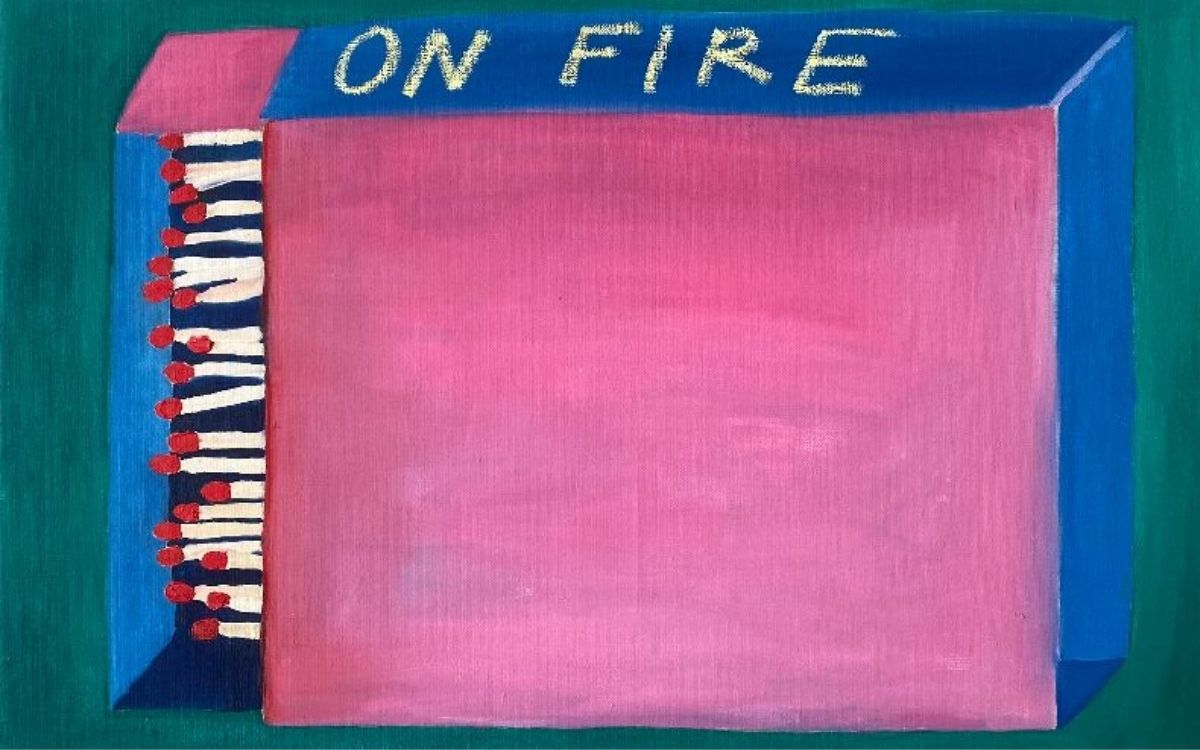
Julia Gescher came to art through an unexpected route, trading a degree in Communication Science for a practice built on illustration, painting, and design. That background shows in the work: clear in expression, attentive to feeling rather than message, and quietly attuned to the small visual traces of everyday life. Vintage cookbooks, hand-painted shop signs, an old salt and pepper set: these are the kinds of objects that catch Gescher's attention, each one carrying a story worth noticing. What follows is a conversation about stillness, boredom, and the long path toward trusting one's own voice.
Have you ever felt drawn toward a conventional career path? What made you take the "creative leap" despite the risks?
I grew up painting and drawing. My favourite way to spend an afternoon was listening to audiobooks while drawing for hours.
When it came to choosing a degree, I didn’t study art or design at first. Becoming an artist simply didn’t feel like a realistic or accepted option in the environment I grew up in. Instead, I studied Communication Science at the University of Amsterdam, with a minor in Persuasive Communication.
During an exchange semester at San Francisco State University, I took courses in Digital Media Art and was introduced to artistic practices I hadn’t encountered before. Around the same time, a friend started a self-published feminist zine. It was my first experience of seeing political ideas transformed into a physical object that combined essays, poetry, illustration, and graphic design.
I became fascinated by the idea of shaping messages visually and creating forms that could strengthen and communicate ideas. That experience eventually led me to pursue a second degree in Visual Communication, focusing on illustration.
Today, I work as an artist, illustrator, and designer, which feels like a natural continuation of something that was already there from the beginning.
How important is it for viewers to understand the intended message of your work? Does ambiguity add value, or do you seek clarity in your expression?
I intend to evoke a feeling rather than an intended message. I do think my expression is quite clear, however always with small hidden messages, that are personal to me but can also speak to the viewer. I want the viewer to be reminded of experiences they might have had in the past or situations they might long for in the future. All in all it is about a feeling. A lot of people are facing anxiety and fear at the moment. The goal with my paintings is create a moment of stillness and can result into positive emotions like joy or contempt.
What unusual or unexpected sources of inspiration have deeply influenced your work?
In a time when we are constantly flooded with information, I actively seek out moments of boredom. It is often in those quiet, unstructured moments that new ideas begin to emerge.
I’m also deeply inspired by everyday visual culture. I love collecting vintage books, especially old cookbooks. The worn pages, handwritten notes, illustrations, and typography often feel like small time capsules that tell stories about another era.
When I travel, I pay close attention to things many people might overlook: hand-painted shop signs, old typography on storefronts, restaurant menus, balconies, window displays, or the way people arrange objects in their homes. I’m fascinated by these small traces of everyday life and the stories they suggest.
Sometimes inspiration comes from something as simple as a ceramic bowl, a particular chair, or an old salt and pepper set. I often find myself wondering who owned these objects, what their daily rituals looked like, and what memories might be attached to them. Finding stories in ordinary things is a recurring source of inspiration in my work.
How do you feel social media is shaping the way art is created, consumed, and valued today?
In many ways, it functions like a self-curated gallery. It allows artists to connect with audiences, collectors, and collaborators across the world in ways that were previously impossible. As a result, art has become more accessible, and artists have more opportunities to make their work visible without relying solely on traditional gatekeepers.
At the same time, social media can encourage art to be valued based on visibility rather than depth. Work that is easy to consume often performs better than work that requires time and attention. I think that is one of the biggest challenges artists face today.
I am also concerned about the increasing use of artists’ work in AI training systems without consent, and the impact this may have on originality and authorship.
Do you think art that is created for commercial success loses its integrity, or can it still hold meaning?
I think meaningful work can exist in both personal and commercial contexts. Throughout history, artists have worked on commissions or created work within commercial contexts.
Personally, I move between different fields as an artist, illustrator, and designer. Some projects are deeply personal, while others are created in collaboration. I enjoy both. In each case, the challenge is the same: creating something thoughtful, visually engaging, and meaningful.
Creating sustainable conditions for your practice does not diminish the value of the work—it allows the work to continue.
How do you respond to debates about the accessibility of art—should it be exclusive, or is it for everyone?
I believe art should be for everyone. While original artworks may not always be financially accessible, the experience of engaging with art should never be limited to a select group of people. That is one reason why I also offer art prints alongside original paintings. They allow more people to bring art into their everyday lives and build a personal connection with a piece of work.
What are five things you do to overcome creative blocks or feelings of discouragement?
Go for a walk or for a run without listening to music, podcasts, or anything else.
Allow yourself to be bored.
Visit a local museum. I especially enjoy returning to museums I know well and giving myself a specific challenge—for example, only looking at the shoes, jewellery, or table settings in the paintings.
Commit to working for just ten minutes. You are allowed to stop afterwards, but most of the time you won’t want to.
Build a small circle of trusted people who can offer feedback, encouragement, and accountability.
What would the theme song of your artistic journey be, and how does it reflect your story?
I recently rewatched Kiki’s Delivery Service by Hayao Miyazaki, so I would probably choose the entire soundtrack.
The movie follows Kiki, a young witch who leaves home to find her place in the world. Along the way, she struggles with self-doubt, loneliness, creative block, and the pressure of defining herself through her work.
What resonates with me most is that her journey is not about becoming extraordinary—it is about learning to trust her own abilities and finding confidence in who she already is.
I think many artists can relate to that. Building a creative career often means moving forward despite uncertainty, continuing to work through periods of doubt, and slowly finding your own voice.
What stands out in this conversation with Julia Gescher is a genuine appreciation for the ordinary. The work is not after grand statements; it is after a feeling, a moment of stillness offered to viewers who might be carrying more anxiety than they know what to do with. Moving comfortably between personal and commercial work, between painting and illustration and design, Gescher treats every project with the same care: thoughtful, visually engaged, and rooted in everyday life rather than spectacle. Much like Kiki in the film that inspired this conversation's closing thought, the journey here is less about becoming extraordinary and more about learning, slowly and steadily, to trust the voice that was there all along.