
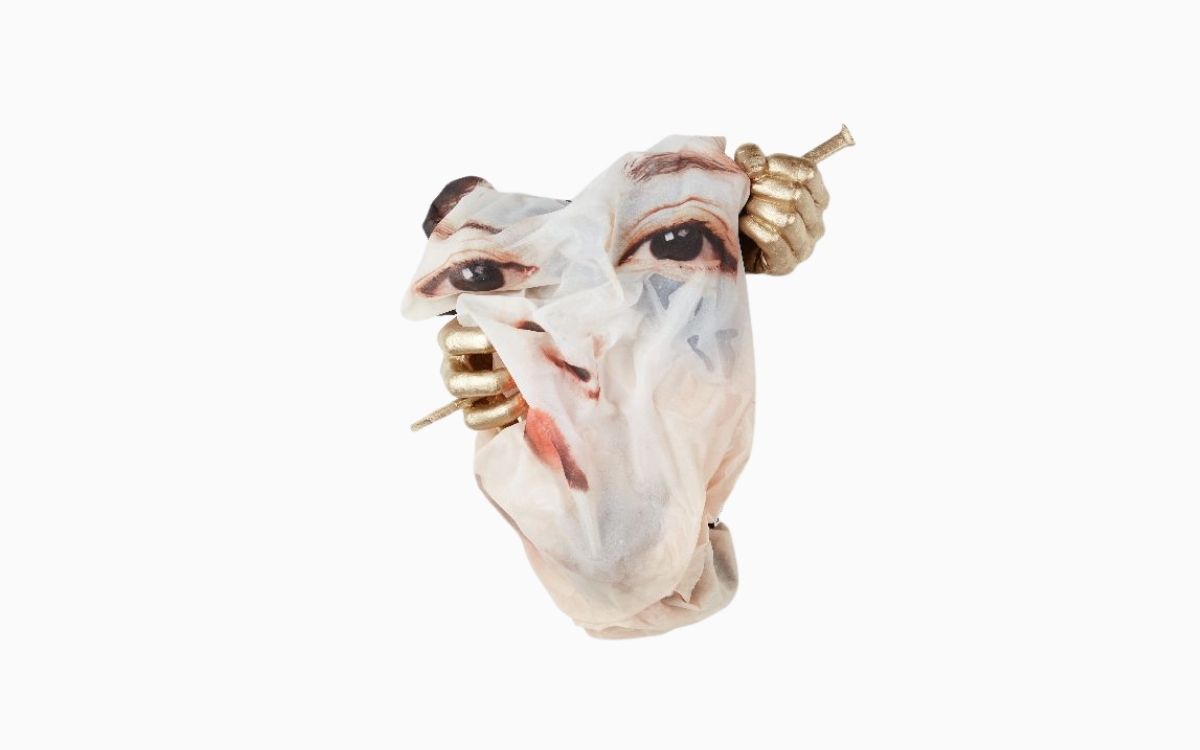
Kacy Jung makes work that exists between image and object, memory and presence. Trained first in biomedical science before turning to photography and sculpture, Jung now creates photo-based sculptural pieces using translucent fabric, plaster, and body casting, materials that hold the capacity to reveal and conceal at once. Migration, belonging, and identity form the core of the practice, approached not as fixed conditions to resolve but as ongoing processes of becoming. What follows is a conversation about science, displacement, and the long, careful work of building a sense of home within constant change.
How has your upbringing or cultural heritage shaped the themes and techniques you explore in your art today?
I grew up in Taiwan and immigrated to the United States as an adult. Living between cultures has profoundly shaped both the themes and materials in my work. Migration taught me that identity is not fixed; it is constantly negotiated, reshaped, and reconstructed through new experiences, languages, and environments.
My work explores migration and belonging as unstable conditions, and re-homing as an ongoing process rather than a final destination. I create photo-based sculptures using digital photography, translucent fabric, plaster, and body casting. The semi-transparent fabric reflects the fluid nature of identity—it can reveal and conceal simultaneously, much like the experience of navigating multiple cultural systems.
As an immigrant, I gained new freedoms and opportunities, but I also experienced the tension of leaving behind familiar ways of understanding myself. Through photography and sculpture, I explore how we carry fragments of our past while continuously becoming someone new. My work is less about documenting a specific place and more about examining the emotional and psychological process of building a sense of home within constant change.
Have you ever felt drawn toward a conventional career path? What made you take the creative leap despite the risks?
Before becoming an artist, I was pursuing a PhD in Biomedical Science at the University of North Carolina at Chapel Hill. For most of my life, I followed a conventional path shaped by academic achievement and scientific training. Art was something I loved deeply, but it was never presented as a realistic career option.
While living in North Carolina, far away from my family and support system in Taiwan, I began taking long walks and photographing my surroundings with my phone. Photography became a way to process uncertainty and reconnect with myself. Those images eventually led me to photography classes, part-time wedding photography, and ultimately an MFA in Photography at the San Francisco Art Institute.
Leaving science was not a sudden leap of faith. It was a gradual realization that creativity was not simply a hobby but an essential way of understanding the world. Even today, I continue to balance artistic ambition with practical realities, but I have never regretted choosing a path that allows me to remain curious, reflective, and engaged with the questions that matter most to me.
How does your art engage with or comment on pressing contemporary issues?
My work explores migration, belonging, identity formation, and the pressures individuals face while navigating larger social systems. As an Asian immigrant woman who transitioned from science to art, I am interested in how cultural expectations, social norms, and systems of power shape our sense of self.
Through photo-based sculpture, I investigate what happens when people move between places, professions, and identities. The work often reflects experiences of displacement, adaptation, and transformation. Rather than offering direct political statements, I focus on how larger systems are experienced at a personal level.
I am particularly interested in the tension between freedom and constraint. Migration can create new possibilities while also requiring the loss or revision of familiar identities. By transforming photographic self-portraits into sculptural forms, I explore how identity is continuously reconstructed through these experiences.
Ultimately, my work asks what it means to belong, how we define ourselves beyond external expectations, and how we continue to build meaning in a rapidly changing world.
Describe a piece you've created that has held the most emotional weight for you. What makes it significant?
One of the most emotionally significant projects I have created is The Weight of Souls, an ongoing body of work that combines field research, artist interviews, photography, and photo-based sculpture.
The project began as an exploration of people who left conventional career paths to pursue creative lives, including my own transition from biomedical science to art. Through interviews and portraits, I became interested in the personal sacrifices, uncertainties, and transformations that accompany major life changes. Over time, the project expanded into a broader investigation of migration, belonging, identity, and self-determination.
The sculptural works within the series often incorporate self-portraits printed on translucent fabric, body casting, and mixed media. Rather than presenting a single narrative, each piece explores a different stage of empowerment, healing, loss, or reconstruction. Together, they form a larger conversation about how individuals navigate social expectations while trying to remain true to themselves.
What makes The Weight of Souls especially meaningful to me is that it mirrors my own journey. The project began with questions about career, purpose, and fulfillment, but gradually evolved into deeper questions about identity, belonging, and what it means to build a life on one's own terms. Even today, these questions continue to shape both my work and my understanding of myself.
How has your artistic style transformed over the years? Are there specific influences, experiments, or moments that marked a turning point?
I began as a photographer. In the early years, I was primarily interested in making images and understanding how photography could communicate emotion, memory, and personal experience. Over time, however, I became increasingly frustrated by the limitations of the flat photographic print. I wanted viewers to experience images physically rather than simply look at them.
A turning point came when I started experimenting with printing photographs onto translucent fabric. The material introduced movement, depth, and fragility into the work. It allowed the image to exist somewhere between presence and disappearance. Later, I incorporated plaster body casts and sculptural elements, transforming photographs into three-dimensional forms that occupy space.
The shift from photography to photo-based sculpture also mirrored changes in my thinking. Earlier projects focused more directly on themes of capitalism, consumer culture, and social systems. While those concerns remain present, my work has gradually become more personal and introspective. I have become increasingly interested in migration, belonging, identity, and the emotional process of transformation.
Today, I see photography not as the final artwork, but as raw material. My practice continues to evolve through experimentation with new materials, installation, and functional sculptural forms, while remaining grounded in questions of identity, memory, and human resilience.
In an increasingly globalized world, how can artists preserve authenticity and cultural integrity in their work?
I don't believe authenticity comes from preserving culture in a static or unchanged form. Culture has always evolved through movement, exchange, adaptation, and translation. As someone who immigrated from Taiwan to the United States, my own experience has taught me that identity is constantly shifting.
For me, preserving cultural integrity is less about protecting a fixed version of culture and more about remaining honest about one's lived experience. The immigrant experience often exists between categories. There are moments of connection, contradiction, loss, and discovery happening simultaneously. I think artists have a unique ability to hold these complexities without forcing simple conclusions.
In a globalized world, there can be pressure to simplify cultural identities into easily recognizable narratives. I try to resist that impulse. Instead, I focus on personal experiences and specific stories. The more honestly we speak from our own position, the more universal the work can become.
I believe authenticity emerges through curiosity, self-reflection, and a willingness to embrace complexity. Rather than searching for a pure or fixed identity, I am interested in how people continuously negotiate who they are as they move through different cultures, communities, and stages of life.
How do you envision the evolution of your work in the coming years?
In recent years, my work has focused on photo-based sculpture, identity, migration, and belonging. Looking forward, I am interested in expanding these ideas through larger installations and functional sculptural objects, particularly works that incorporate light.
I have become increasingly interested in the concept of transformation—not only as a psychological experience but also as a material process. I am exploring how discarded objects, reclaimed materials, and unexpected forms can be reimagined and given new purpose. This process parallels my ongoing interest in how people reconstruct themselves through change, displacement, and adaptation.
I am also interested in creating more immersive environments that invite viewers to physically engage with the work. Rather than presenting individual sculptures as isolated objects, I want to create spaces that encourage reflection, movement, and emotional connection.
Conceptually, migration, belonging, and re-homing will likely remain central themes in my practice. These questions continue to evolve as I do, and I suspect they will accompany me throughout my life. My goal is not to arrive at definitive answers, but to continue asking better questions through the work.
What kind of legacy do you hope to leave in the art world?
I hope my work encourages people to think more deeply about identity, belonging, and the ways we continuously transform throughout our lives. If there is a legacy I would like to leave, it is not tied to a particular style or object, but to a way of approaching uncertainty with curiosity and openness.
Many of my projects begin with questions rather than answers. What does it mean to belong? How do we rebuild ourselves after major transitions? How do we carry the past while remaining open to change? These questions have shaped my own life as an immigrant, artist, and former scientist, and they continue to guide my practice.
I also hope to contribute to expanding conversations around photography and sculpture by challenging the boundaries between the two. Through fabric, body casting, and material experimentation, I aim to create works that exist between image and object, memory and presence.
Ultimately, I hope people encounter my work and feel less alone in their own experiences of change. If the work creates space for reflection, empathy, and a deeper understanding of our shared humanity, that would be the most meaningful legacy I could imagine.
What stays with you after this conversation is Kacy Jung's insistence that identity is never something to arrive at, only something to keep negotiating. From a PhD program in North Carolina to an MFA in photography, from flat prints to translucent, body-cast sculpture, the work has always moved toward greater honesty rather than greater certainty. The Weight of Souls, like much of the practice, begins with questions about career and purpose and ends somewhere deeper: belonging, transformation, and what it means to build a life on one's own terms. Jung does not offer resolution. The hope, instead, is that the work helps people feel a little less alone inside their own experience of change.