
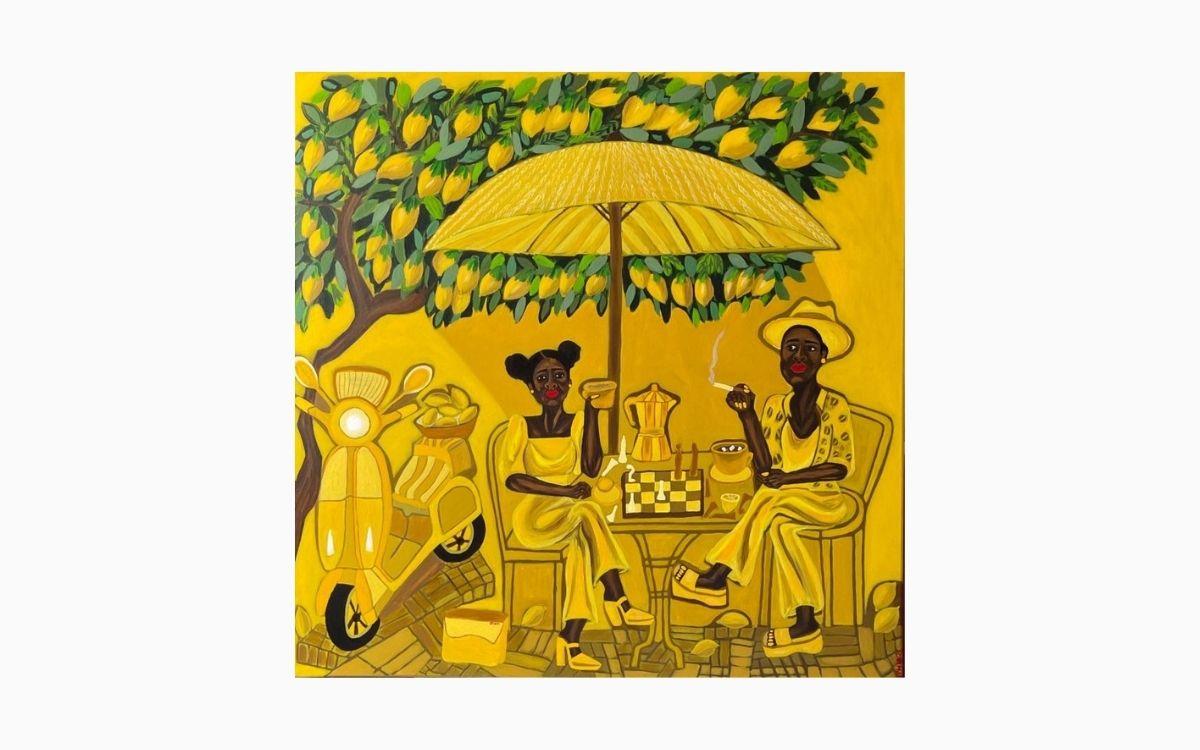
Sophia Oshodin paints Black figures who occupy space with dignity, joy, and unwavering confidence. Balancing a conventional career alongside a committed art practice, Oshodin works from imagination rather than direct portraiture, drawing on memory, history, and everyday life to construct fictional figures who carry new narratives forward. The work is rooted in freedom: freedom from approval, freedom to reimagine, and freedom to give long-overlooked subjects the presence they deserve. What follows is a conversation about balance, healing, and the quiet determination behind the canvas.
Have you ever felt drawn toward a conventional career path? What made you take the "creative leap" despite the risks?
Painting has always been a significant part of my life, and I have chosen to maintain a conventional career alongside my art. This traditional career path was strongly encouraged by my parents.
Being an artist often brings uncertainty, feelings of undervaluation, and a degree of financial instability, especially before gaining recognition.
That said, art has transformed my life in countless incredible ways, and I will always be grateful for it. For now, I will continue to manage both careers, multitasking and striving for a balance that allows me to keep creating.
Art is often chosen as a medium for its freedom. Why do you personally turn to art, rather than another form of expression?
Art has given me my own voice and a unique freedom and space to create as I desire, without having to beg for approval. Personally, I paint figures that are often beyond my words. I created Black figures in which my subjects own their space with dignity and joy; elevating the subject with confidence and a positive narrative, this grants me control and the freedom of expression.
How do you reignite creativity during those inevitable periods of self-doubt or stagnation?
This happens sometimes, and I often take a step back to engage with other life activities. I visit museums to study old masters' works and art exhibitions in London, and this helps bring fresh ideas. I do not create art under pressure; I create when I have a story that interests me. Drawing also helps me regain creative control and get back on track.
Are there any upcoming projects or dreams that you’re particularly excited about?
I have an upcoming art fair that I am excited to participate in. I am currently preparing the pieces that I will exhibit at the fair. Additionally, I am planning my second solo exhibition, which requires a lot of work, dedication, theme development, and a new strategy. I am very excited and looking forward to both exhibitions.
Do you feel a personal connection to your subject matter is essential? How has this connection shaped your work?
I focus exclusively on imaginary subjects in my painting. I do not depict anyone I know or have a personal connection with. This is something that has worked for me since I started, by recreating fictional figures inspired by everyday real-life situations. From Memories or historical stories, I can reimagine each character with possibilities, unwavering confidence, occupying space and new history and bring those narratives to life on my canvas with joy.
Can art be truly therapeutic? Have you experienced its healing power personally, or seen it impact others?
Art has always held a special place in my heart. Creating art is therapeutic; I have used art as a healing tool, and it has helped me manage stress and brought me genuine joy, especially during times when I was grieving lost family members. Collectors have also shared with me that they connect with my pieces to find healing and happiness.
How do you approach criticism, whether from peers, critics, or audiences?
Criticism is an inherent aspect of being an artist whose work is shared with the public. Some criticisms are constructive to a point and do help artists grow, while some criticisms can be unhelpful and interpreted as gatekeeping. I have learned not to focus on criticism as much anymore because everyone is entitled to their own interpretation of my work. When I first started years ago, I wasted time dwelling on critical feedback; I have learned to accept it as part of creative communication.
What comes through clearly in this conversation is that Sophia Oshodin's practice is built on patience rather than urgency. There is no rush to create under pressure, no need for every story to come from personal experience, and no interest in dwelling on criticism that does not serve growth. Instead, there is a steady commitment to telling stories that elevate, to recreating figures who claim their space with confidence, and to treating art as both a discipline and a form of healing. With an art fair and a second solo exhibition on the horizon, that commitment shows no sign of slowing down.