
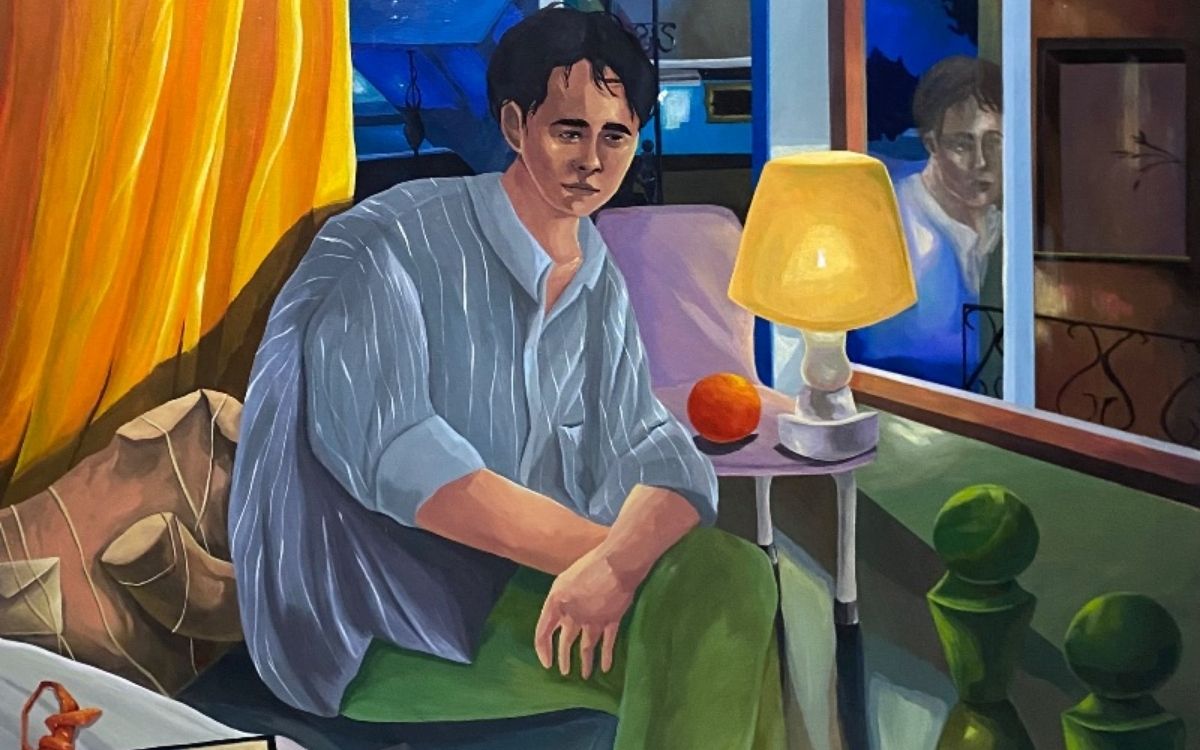
Mark Hernandez paints the moments that pass without being noticed. The practice is built around the human figure, around the quiet emotional textures of daily life, around dining tables at night and the subtle moods embedded in familiar relationships. In a world that moves fast and rewards the immediate, there is a deliberate counter-pressure in this work: an insistence on slowing down, looking more closely, and finding meaning in the repetitive and the mundane. The subjects come from people genuinely known, and the connections formed with them shape the emotional tone of everything that follows. What follows is a conversation about why ordinary moments deserve to be preserved, and what painting can hold that time alone cannot.
How has your upbringing or cultural heritage shaped the themes and techniques you explore in your art today?
My upbringing and life experiences have greatly shaped my artistic practice. Growing up surrounded by family, friends, and everyday interactions nurtured my interest in exploring identity, human connection, and introspection through figurative painting. The familiarity of close relationships and the subtle emotions embedded in daily life continue to be important sources of inspiration in my work.
As an artist living in a fast-paced contemporary environment, I am particularly drawn to observing how modern life influences our emotions, behaviors, and sense of self. These observations inspire me to create paintings that capture quiet, often overlooked moments that reflect both personal experiences and broader cultural realities. Through the human figure, I explore themes of memory, belonging, vulnerability, and self-discovery.
Painting serves as a way for me to interpret and preserve these experiences while remaining grounded in my own identity. It allows me to reflect on the relationship between personal narratives and cultural influences, creating works that are both introspective and connected to the world around me.
What do you think is the most meaningful role an artist plays in society today?
In today's fast-paced world, where technology and artificial intelligence are becoming more prominent, I think one of the most meaningful roles of an artist is to remind people to slow down and reflect. Through art, we can capture emotions, personal experiences, and everyday moments that are often overlooked. Whether it reflects personal stories, social issues, or ordinary scenes, art creates space for connection, reflection, and understanding. I hope my work encourages people to become more present and find meaning in the experiences that shape our daily lives.
If you could communicate just one core message through your entire body of work, what would it be?
If I could communicate one core message through my work, it would be to look more closely at the ordinary moments of everyday life. The days that feel repetitive, stagnant, or uneventful often hold experiences, emotions, and insights that we tend to overlook. Through my paintings, I hope to encourage people to find meaning in the mundane and appreciate the small details that shape who we are.
I believe that living with curiosity, uncertainty, joy, and even grief is part of what makes us human. These experiences help us understand ourselves more deeply and give us reasons to keep moving forward with hope and openness.
Can you take us through the evolution of an artwork, from that first spark of inspiration to the finished piece?
My inspiration usually comes from familiar, everyday scenes—whether it’s something I observe outside or quiet, introspective moments like a dining table at night. I’m drawn to narratives rooted in the lives of the people around me.
My process often begins with quick, loose sketches in my small sketchbook, which I later translate onto canvas. From there, my approach is a balance of planning and intuition. While I may have a general idea in mind, I allow space for spontaneity—exploring color, gesture, and figures that naturally emerge as I paint.
This process keeps me engaged for long hours, often from morning until late at night. In the end, I not only complete a finished piece but also discover new techniques, subjects, and visual directions that influence my next work. For me, painting is a continuous cycle of observation, exploration, and reflection.
Do you feel a personal connection to your subject matter is essential? How has this connection shaped your work?
Yes, I believe having a personal connection to my subject matter is essential in creating art. It is what makes an artist’s work feel authentic and distinct. While techniques, styles, and even subject matter can be learned or imitated, no one can replicate your lived experiences or the way you perceive them.
My subjects often come from people I personally know and have formed genuine connections with. These relationships and shared moments shape the mood and emotional tone of my work. Hence, my paintings carry traces of my own experiences and feelings, becoming a way of preserving moments that might otherwise fade with time. For me, painting becomes a way of holding onto what time cannot.
How do you feel social media is shaping the way art is created, consumed, and valued today?
Social media surely has pros and cons but I want to take it in a more positive light when it comes to art. It allows us to easily access inspiration, stories, and visual references, while also broadening our exposure to different perspectives and cultures. This accessibility helps artists grow creatively and encourages more experimentation across different art forms as technology continues to evolve too.
It also makes it easier for artists to share their work with a wider audience, connect and influence besides traditional galleries or institutions. In this way, art becomes more visible, more immediate, and more connected to everyday life. Overall, I think social media helps art become more dynamic and inclusive.
How do you think art should be valued—emotionally, socially, or monetarily? Is there ever an objective measure?
Art should be valued beyond fixed measures because it is inherently subjective and open ended. It can be experienced emotionally, socially, and even monetarily, but none of these alone can fully define its worth. Art is something we live with, respond to, and interpret in deeply personal ways.
Rather than being purely calculative, art invites reflection and contemplation. A painting, for example, can reveal different meanings to different people and even help us discover something about ourselves that we were not previously aware of and for me that is the value of an artwork.
In an increasingly globalized world, how can artists preserve authenticity and cultural integrity in their work?
In an increasingly globalized world, artists can preserve authenticity and cultural integrity by staying grounded in their core identity rather than being overly influenced by trends or what is currently popular. While it is natural to be exposed to different styles and movements, remaining true to one’s personal experiences and perspective is what keeps the work authentic.
Embracing both positive and difficult life experiences also plays an important role, as these become meaningful sources of inspiration. In this way, art becomes more personal and unique— something that only the artist, shaped by their own life and context, can create.
What kind of legacy do you hope to leave in the art world?
I still have a long way to go in fully understanding the kind of legacy I want to leave in the art world. But what I hope for, not just for myself but for other artists as well, is to continue creating and showing up every day, even when it feels uncertain or difficult.
I believe it is important to keep returning to that original reason for starting—to constantly ask ourselves why we create in the first place. If anything, I hope my journey and work reflect that persistence, honesty, and ongoing search for meaning in making art.
Mark Hernandez is still working out the kind of legacy worth leaving, and says so with the honesty of someone early enough in the journey to mean it. What is already clear is the commitment: to keep showing up, to keep returning to the original reason for starting, to keep asking why the work matters. The paintings that come from that ongoing search are quiet but not passive, personal but not closed, grounded in specific lives while reaching toward something more widely felt. Painting as a continuous cycle of observation, exploration, and reflection. That cycle, for now, is enough.