
How has your upbringing or cultural heritage shaped the themes and techniques you explore in your art today?
I grew up in Mexico City, which is a place full of contrast visually, emotionally, and culturally. There’s chaos, color, noise, spirituality, and contradiction all coexisting at once. I think that deeply shaped how I perceive reality: not as something linear or fixed, but as something layered, fluid, and constantly shifting.
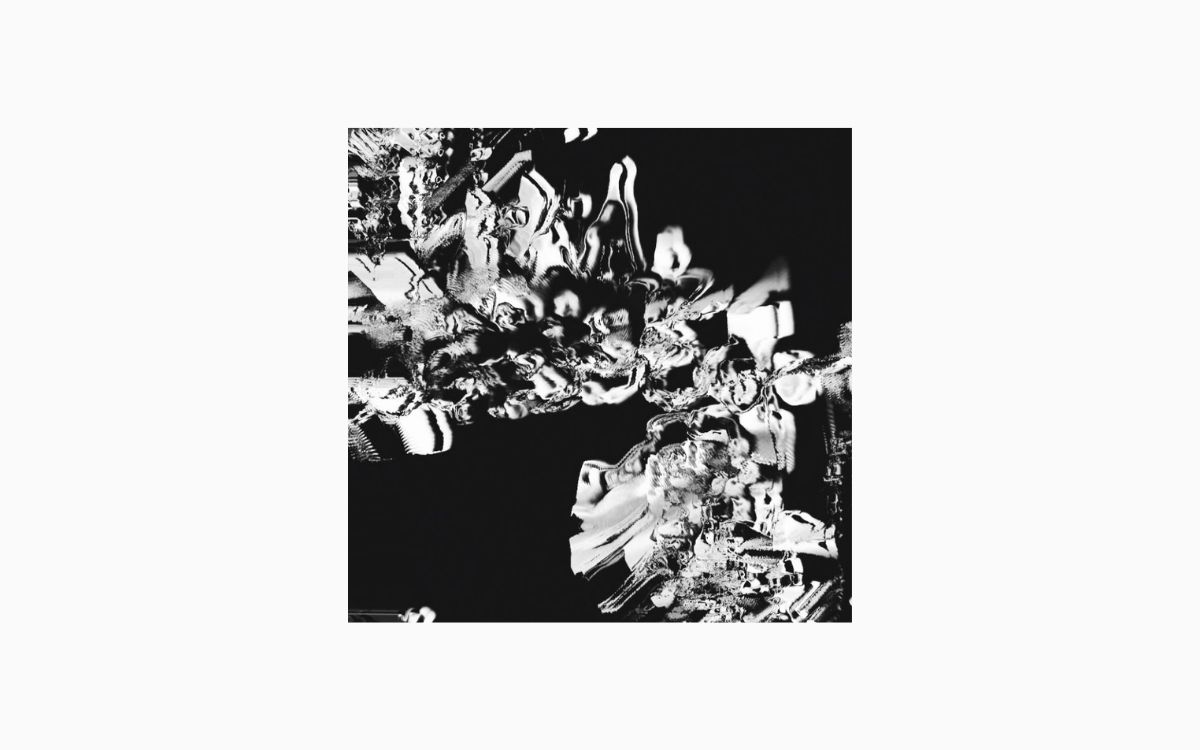
That translates directly into my work. I’m drawn to creating visuals that feel alive, almost like they’re breathing or evolving in real time. There’s often a tension between control and unpredictability, something structured but also organic and unstable.
On a deeper level, my upbringing also shaped my sensitivity. I’ve always felt things very intensely, and that emotional depth became both a challenge and a tool. My work is, in many ways, an attempt to process that intensity and turn it into something immersive and shared.
Does spirituality or a connection to something larger than yourself influence your creative process?
Yes, very strongly. For me, creativity doesn’t feel like something I fully “own.” It feels more like I’m tuning into something and translating it. There are moments in my process where ideas don’t feel logical, they just arrive. And I’ve learned to trust that. I think of it less as “creating” and more as allowing something to pass through me.
Spirituality also shows up in my interest in perception: how we construct reality, how identity shifts, how opposing truths can coexist. I’m fascinated by the idea that things can be contradictory and still true at the same time. That paradox is something I explore visually through fluid forms, unstable structures, and evolving systems.
How do you reignite creativity during periods of self-doubt or stagnation?
Honestly, I don’t always try to “fix” it immediately. I’ve learned that forcing creativity usually makes things worse. Most of the time, stagnation is not the absence of ideas it’s resistance. So instead of pushing, I try to shift my state. That might mean stepping away, moving my body, or exposing myself to completely different stimuli, music, conversations, nature, even boredom.
Also, something important for me has been accepting that my creativity is cyclical. I used to panic when I didn’t feel inspired, but now I understand that those quieter periods are part of the process. They’re usually preparing something underneath.
What do you think is the most meaningful role an artist plays in society today?
I think artists expand perception.
In a world that is increasingly structured, optimized, and fast, art creates space for ambiguity, emotion, and alternative ways of seeing. It reminds people that reality is not fixed. For me, the most meaningful role isn’t necessarily to give answers, but to open questions—or even just create a feeling that shifts someone internally, even if they can’t explain why.
How important is it for viewers to understand the intended message of your work?
It’s not that important to me that they understand it in the way I intended.
In fact, I think some of the most interesting moments happen when people interpret my work in ways I didn’t expect. It reveals something about perception, how we project our own experiences onto what we see. Ambiguity adds a lot of value for me. I prefer when a piece feels open, almost like a mirror, rather than something that delivers a fixed message.
Can you take us through the evolution of an artwork, from that first spark of inspiration to the finished piece?
It usually starts with a feeling rather than a clear idea. Something subtle like a texture, a movement, or even an internal sensation.
From there, I begin experimenting. I work a lot through iteration, especially with digital tools, so there’s a phase of exploration where I don’t fully know where it’s going. I try different forms, systems, and behaviors.
At some point, something “clicks.” It’s hard to explain, but there’s a moment where the piece starts to feel coherent, like it has its own logic.
Finishing is acally the hardest part. Because my work is often fluid and evolving, deciding when something is “done” is more intuitive than technical. It’s about feeling that the piece has reached a state where it can exist on its own.
Artificial Intelligence is increasingly infiltrating creative fields. Do you see AI as a threat, a tool, or a collaborator?
I see it mostly as a tool and potentially as a collaborator, depending on how it’s used.
I don’t think the value of art comes from the tool itself, but from the intention and sensitivity behind it. AI can generate visuals, but it doesn’t replace perception, emotional depth, or lived experience.
That said, I think it’s important to be conscious about how we use it. There’s a risk of homogenization if everyone relies on the same systems without questioning them.
For me, the interesting space is using technology in a way that still feels personal where it expands expression instead of replacing it.
How do you envision the evolution of your work in the coming years?
I see my work becoming more immersive and interactive.
I’m very interested in creating environments where people are not just observers but participants where visuals respond in real time, where sound and image are connected, and where the experience feels alive.
I also want to explore more large-scale projects, like stage design and installations, where my work can exist in physical space and interact with people directly.
Conceptually, I think I’ll keep exploring perception, identity, and emotional states but in more complex and experiential ways.
What kind of legacy do you hope to leave in the art world?
I don’t think of legacy in terms of recognition as much as impact.
If my work can make people feel something real, something that shifts how they see themselves or reality, even slightly that’s enough.
I’d like to be remembered as someone who created experiences that were alive, that made people more aware, more present, or more open.
And also as someone who stayed honest in their exploration, even when things were uncertain.
How is social media shaping art today?
It’s both empowering and distorting.
It has made art more accessible and removed traditional barriers, but it has also introduced a constant pressure to produce, perform, and be visible.
That can pull artists away from their own process.
I think the challenge is to engage with it consciously using it as a platform, but not allowing it to define the work itself.
How do you handle self-doubt or creative blocks?
I’ve stopped seeing them as something to fix immediately.
Most of the time, creative blocks are not about a lack of ideas, but about resistance. So instead of forcing it, I shift my state, step away, move, disconnect.
I’ve also learned that my creativity is cyclical. Periods of stillness are often part of a deeper process that isn’t visible yet.