
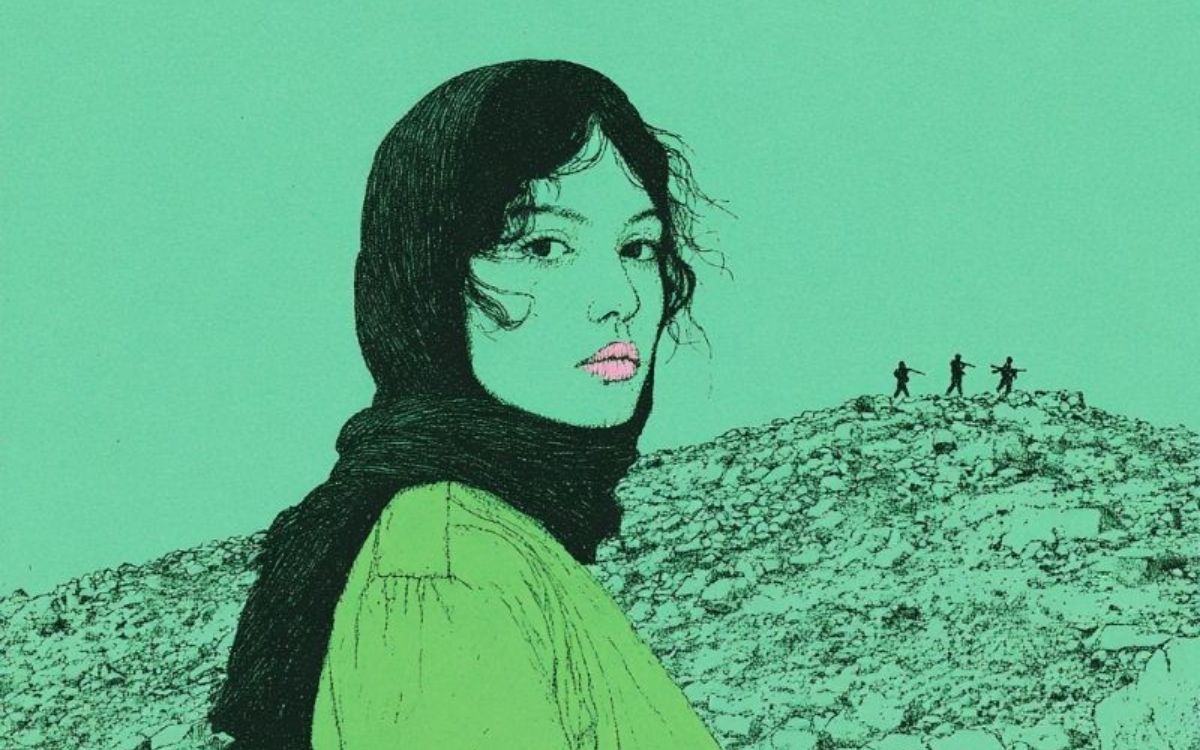
Oona Ode works from the inside out, feeding personal photographs, drawings, sculptures, and textures back into a generative process that reflects obsessions and patterns sometimes before they can be named. Working with AI not as a shortcut but as a recursive collaborator, the practice that has developed is deeply autobiographical: shaped by trauma, by beauty found in houses after fires, by the long process of learning to feel again after years of surface-level functioning. What looks from the outside like open-ended experimentation is, in fact, built from decades of accumulated material, emotional pressure, and repeated return. The images know before the words do. That is the point.
How do you reconcile the tension between raw, innate creativity and the discipline required to master your craft?
I do not really think of my work in terms of balance, and I am not especially drawn to the idea of reconciling raw creativity with discipline as though they are two opposing forces that need to be resolved. My process is much more intuitive than that. I follow my whims, I explore obsessively, and I let myself be pulled by whatever image, feeling, or thought has hold of me in the moment. I do not usually begin with a clear plan, and I rarely map things out in advance. For me, the work tends to emerge through exploration, repetition, and immersion.
A lot of what drives my work comes from my own life experiences, but also from the thoughts I am having about the world around me at any given time. I am often responding to something emotional, psychological, or atmospheric before I can fully explain it. Sometimes the work begins with a memory, sometimes with a story I have heard, sometimes with a song, or simply with a feeling that stays with me and asks to be explored. I use my work to exercise my thoughts, to give them shape, to process them, and to better understand them. I am frequently surprised by what comes up while I work. Instead of balance, what I am often seeking is connection, or maybe resonance is the better word. Through images, I can often express things that I struggle to communicate in words.
At the same time, I would not describe that process as effortless or purely instinctive. Even when the work appears raw, spontaneous, or immediate, it is usually being shaped by a much longer history of attention and return. The work I am most known for is AI-generated, but those images do not come from nowhere. They are the result of years of my own inputs, decisions, and repetitions. I use my own photographs, drawings, sculptures, textures, and previously generated images as part of the structure of my process. I feed my own materials back into the system again and again. Because of that, even when I am working with digital or generative tools, I do not feel separated from the work. It still carries my habits, my obsessions, my memory, and my visual language.
Rarely am I approaching a new thought without filtering it through the lens of older ones. That recursive relationship is central to how I work. Images feed other images. Forms return in altered ways. Certain feelings or motifs resurface over time, but with new pressure behind them. My process is cumulative. I do not leave one thing behind and move cleanly onto the next. Instead, older work lingers and becomes part of the structure for future work. Over time, this has amplified my voice within the system. What might look from the outside like open-ended experimentation is, in fact, deeply shaped by return, selection, and repeated contact with my own archive.
So if there is discipline in my work, it is not discipline in the traditional sense of strict planning, rigid method, or trying to master creativity by controlling it. It is more a discipline of devotion. It is the willingness to keep returning, to keep looking, to keep refining, and to stay with an idea or feeling long enough for it to become something more exact. I think that is where the tension in my work really lives. Not between creativity and control, but between impulse and persistence, between surrender and discernment. I let myself be carried by intuition, but I also return to the work again and again, allowing patterns to build, meanings to shift, and a voice to emerge more clearly over time.
For me, creativity is not a single burst of raw inspiration, and discipline is not something that stands outside it. The two are entangled. My work grows through accumulation, obsession, and recursive transformation. I follow the pull of what feels alive, and then I continue shaping it through repetition and return. That is how the work becomes mine. Not through balance exactly, but through immersion, pressure, and the long process of letting an inner language take form.
How important is it for viewers to understand the intended message of your work? Does ambiguity add value, or do you seek clarity in your expression?
This is an interesting question for me because I feel genuinely torn by it. I do want my work to be understood when it is viewed. I crave that understanding, or maybe more accurately, I crave a kind of resonance. As I mentioned in the previous answer, connection matters deeply to me. Depending on the image, I might want the viewer to feel seen, or less alone. I might want them to feel the same disturbance I feel about a subject, or to enter, even briefly, into a mood or emotional state that the work is carrying. That is one of the things I find most powerful about art: the way a viewer can be drawn into a moment and internally experience part of it, not just intellectually, but emotionally. Art can move through the body as much as the mind.
I think about a visit I made to the Art Institute of Chicago and how deeply one of the works affected me. I was so moved by it that I found myself struggling to hold back tears. I could barely look at it all at once. I had to take it in slowly, in small digestible sections, glancing at it between breaths. I had never been so overwhelmed by a work of art before, and that experience stayed with me. I think part of what I hope for, when I make work, is that someone might feel even a fraction of that intensity in response to something I have made. Not because I need them to arrive at one correct interpretation, but because I want the work to reach them deeply enough that it opens something. At the same time, I never want to tell the viewer exactly what an image means. I do not want to close the work down by over-explaining it. That is one of the reasons my Instagram captions have become very short over time. I want viewers to encounter the image with their own perspective, their own memories, and their own emotional vocabulary. I want them to make sense of the work from their own vantage point. I want them to let the image into themselves and allow it to mean what it means to them.
So for me, ambiguity does add value, but only when it remains emotionally charged. I am not interested in ambiguity for its own sake, or in obscurity that creates distance. I still want the work to communicate. I still want it to carry feeling, atmosphere, and intention. But I do not think clarity has to mean a single fixed message. Sometimes clarity is emotional rather than literal. A viewer may not understand exactly what I was thinking when I made a piece, but they may still understand its emotional logic. They may recognize its ache, its tension, its tenderness, or its unease. That kind of recognition matters to me just as much, and sometimes more, than being interpreted correctly.
So I suppose my answer is that I want both. I want the work to connect and to resonate, but I also want to leave space for the viewer. I want the image to feel open enough that someone else can enter it with their own life, while still carrying enough emotional specificity that it does not dissolve into emptiness. I want to be understood, but not pinned down. I want the work to meet people, not instruct them. For me, that space between recognition and openness is where a lot of the power of art lives.
In a world flooded with imagery, what responsibility do artists have to stand out and say something authentic?
In a world flooded with imagery, I do not think an artist’s responsibility is simply to stand out. That framing feels too tied to attention, speed, and competition. It makes art sound like it has to win against the image stream by being louder or more immediately legible. I understand that pressure, because we all work inside it now, but I do not think that is where the deepest responsibility lies. For me, the more important responsibility is to make something that feels real, something that carries presence, feeling, or thought. Not necessarily something literal or easily explained, but something that has actually been lived with. Something shaped by truth rather than by the pressure to perform. In a world where images are constantly produced, copied, consumed, and discarded, what matters to me is whether a work has weight. Whether it holds a charge. Whether it feels like it came from somewhere real.
I think viewers can often sense the difference between an image that is made to attract attention and one that is made from genuine necessity, curiosity, or emotional pressure. That does not mean the work has to be solemn or heavy, but it should feel inhabited. For me, authenticity is less about confession or transparency than about whether the work is truly connected to the artist’s way of seeing, thinking, and feeling. So if artists have a responsibility, I think it is not to be endlessly original in a performative sense, but to resist emptiness. To resist making work that is only trying to circulate. To stay close to what feels alive, specific, and honest in their own practice. In that sense, saying something authentic matters more than standing out, because when something is truly made from a distinct inner logic, it often stands out anyway. I do think artists should care about their voice. In a saturated visual culture, having a real voice matters because it keeps the work from dissolving into sameness. For me, authenticity is what gives an image its staying power. It is what allows it to cut through, not because it is screaming, but because it feels true.
What unusual or unexpected sources of inspiration have deeply influenced your work?
It’s kind of funny, because what started as a way to protect myself from AI haters ended up becoming the backbone of my whole practice. Early on, I wanted to be able to defend myself and the work, so I made rules for myself. I limited my inputs to my own material. I did not want to rely on artist names in prompts or lean on other people’s visual language. At first that came from defensiveness, but over time it became something much deeper. It forced me to work from my own archive, my own instincts, my own history, and I think that is a big part of why my voice became so strong in the work. It is also why I think people feel something real when they look at my images. A lot of the deepest influences on my work have come from places that are not glamorous or traditionally thought of as inspiration. Trauma has shaped it deeply. Not because I am trying to illustrate trauma directly, but because unprocessed experiences return in strange ways. They come back through mood, repetition, atmosphere, symbol. A lot of my work has come from realizing that something was sitting under the surface of me for a long time and was looking for a way out.
My own archive is also one of the biggest influences on my work. Old generations, old photographs, textures, drawings, sculptures, fragments, things I half-forgot about, I keep returning to them. My process is very recursive, so the work is always feeding back into itself. Older pieces do not really disappear for me. They stay active. They keep offering something up. Sometimes I feel like I am in conversation with my past selves through images. A strange but important influence was the time in my life when I worked in houses after fires. That stayed with me in a big way. I found beauty there, but also devastation, residue, and things I did not know how to process at the time. That definitely entered the work. It shaped the way I think about beauty and destruction living side by side, and I think that tension is still in my images. Music has also been a huge influence, especially in a way that is hard to explain. Sometimes a song gives me a whole emotional atmosphere before I even know what I want to make. Stories do that too. Certain memories do that. Even passing thoughts can do that. I am often less inspired by clean ideas than by feelings that linger and keep pressing on me.
And honestly, AI itself has influenced me in an unexpected way too. Not just as a tool, but almost like a mirror. It reflects my own patterns, obsessions, and recurring symbols back at me, sometimes in ways I did not fully realize were there. Working with it has made me more aware of my own visual language. So even though people often think of AI as something impersonal, for me it has actually become one of the ways I see myself more clearly.
Can art be truly therapeutic? Have you experienced its healing power personally, or seen it impact others?
Yes, art can be truly therapeutic. I have experienced that very personally. I use art to process so much of my life as it is now, but also my past trauma. When I look back through my archive of images, I can see a progression in my healing. The work holds it. For a long time, I was disconnected from myself and functioning mostly on the surface of life. I barely felt my feelings. When I started using AI, I found myself cycling through themes that were rooted in traumatic events from my life. I began letting those thoughts out in a nonverbal way, and through those cracks, I started to allow myself to feel. What was powerful about that process is that it let things surface before I could fully explain them. I was not always making work from conscious understanding. Sometimes I was making something first and only later realizing what it was connected to. The images often knew before I did. That is part of why art has been therapeutic for me. It has given me a way to approach what was buried, fragmented, or difficult to name. It has helped me access emotional material that I might not have reached through words alone.
In my early work, I focused a lot on flames and burning buildings. Before becoming an artist, I worked in a job that took me into houses after fires. I often found beauty there, but I also saw a great deal that was dark and unsettling, things I never really processed at the time. That found its way into my work. Beautiful destructive flames, shadows of ash, brightly hued pain. Looking back, I can see that the work was carrying things I had not yet fully named. It was a way of returning to those spaces and experiences without having to explain them directly. Later, my work shifted into even more personal areas. I use my art very much like a journal. It is all there, laid out for the people willing to stop and really look. I am not afraid of showing the world my weakness or my darker moments. In fact, I think there is something healing in sharing those things, in refusing to sit inside them alone. Art can create a bridge between private feeling and shared recognition. It can make something isolating feel visible.
I have also seen the impact that kind of honesty can have on other people. When viewers respond to my work, what stays with me most is not when they try to decode it perfectly, but when they recognize something of themselves in it. Sometimes people respond to an image because it touches a grief, a fear, or a longing they have not had language for either. That kind of response reminds me that art does not heal only through explanation. It can heal through resonance, through recognition, and through making someone feel less alone in what they carry. I do not make art to shock people. I make art that is often very true, very blunt, and sometimes hard to look at. The good and the bad are both there. For me, the beauty of the work comes from being honest and unapologetically myself. That honesty is part of what makes it healing. It allows me to process what I have lived through, but it also leaves space for other people to encounter something of their own within it. So yes, I believe art can be deeply therapeutic. I have felt its healing power in my own life, and I have seen how honest work can open something in other people as well. For me, art is not separate from healing. Very often, it is the way healing becomes visible.
Artificial Intelligence is increasingly infiltrating creative fields. Do you see artificial intelligence as a threat, a tool, or a collaborator in the art world?
In some ways, I see AI as all three: a threat, a tool, and a collaborator. But for me, collaboration is the most meaningful way to understand it, and I believe that is where the most interesting future lies. I am not an artist who needs complete control over every part of the process. In fact, part of what excites me about working with AI is the element of surprise. The moment before my ideas render on the screen feels like holding my breath. In that moment, I am wondering about my choices. Were my images and moodboards the right ones to guide the model toward what I was reaching for? Was it the right prompt? Did I build the right conditions for something true to emerge?
I think this is one of the aspects of AI art that many people struggle to understand. They ask how it can be art if it is not fully and directly expressed by the artist’s mind. But to me, that is exactly why it is collaborative. I bring a great deal to the system. I bring my handmade artwork, my past generations, my photographs, my own curated moodboards built from my archive, and most importantly, my own thoughts, obsessions, and experiences. Those things form the backbone of the work. I am not simply pressing a button and accepting what appears. I am building a visual logic, feeding it back into itself, and working through ideas relentlessly. Then my artistic eye takes over in another way. I select, I refine, I look deeper into the images. I notice fragments of truth and I chase them through the system, pulling them toward the surface. That pursuit is part of the art. The process is not about total authorship in a traditional sense, but about shaping, recognizing, and drawing out what feels alive.
At the same time, I do understand why AI can feel threatening within the art world. It raises real questions about labor, authorship, value, and the speed at which imagery can now be produced. Those concerns are not trivial. But I do not think fear alone is enough to define the medium. Like many tools or technologies, its meaning depends on how it is approached and what is being brought into it. For me, AI is most powerful when it is used in a deeply personal and recursive way. It becomes less a replacement for creativity and more a responsive system that I work with. It can surprise me, resist me, mislead me, and reveal things back to me that I did not fully know I was trying to say. That is why I experience it not only as a tool, but as a collaborator.
List five core themes or messages you aim to convey through your art.
Transformation
Transformation is one of the deepest themes in my work. I am interested in the way an image, object, or feeling can shift over time through repetition, reworking, and return. My process is often recursive, which means I rarely approach something only once. I come back to images, materials, and emotional states again and again, allowing them to change as I change. Because of that, meaning in my work is usually not fixed from the beginning. It builds through accumulation, revision, and movement. I am drawn to the idea that something can be broken down, re-formed, and made strange or newly alive through process.
Emotional truth
I want my work to carry real emotional weight. Even when the imagery is surreal, stylized, or highly constructed, I am still trying to express something honest. I am interested in grief, longing, fear, tenderness, desire, vulnerability, and psychological tension. I do not think emotional truth requires realism. In many ways, I think images can hold feeling more powerfully when they move beyond direct description. What matters to me is that the work feels inhabited, that it carries something real inside it. I want the viewer to sense that the image comes from an actual emotional pressure, not just from surface aesthetics.
Trauma, healing, and self-revelation
A lot of my work comes from processing lived experience, including trauma, healing, and the long process of coming back into contact with myself. Looking back across my archive, I can see that the work traces my attempts to feel, understand, and reassemble myself over time. Often the work reveals things to me before I can explain them in words. It becomes a way of accessing thoughts and feelings that have been buried, avoided, or difficult to name. In that sense, art has been deeply therapeutic for me. It has given shape to experiences that otherwise might have remained unspoken.
The tension between beauty and disturbance
I am drawn to images that hold both attraction and unease. I often want the viewer to be pulled in by beauty while also sensing something darker, stranger, or more difficult beneath the surface. That tension matters to me because it feels closer to real life. So much of human experience contains contradictions. Something can be beautiful and painful at once. Something can shimmer while carrying damage. I think some of the strongest images are the ones that do not resolve too easily, the ones that invite the viewer closer and then unsettle them.
Connection and resonance
More than delivering a single fixed message, I want my work to create recognition. I want viewers to feel something of themselves in it, to feel seen, unsettled, less alone, or emotionally met in some way. Resonance matters more to me than explanation. I do not want to overdetermine what a viewer should think, but I do want the work to carry enough feeling and intention that it can genuinely connect. If someone feels moved, haunted, understood, or quietly opened by an image, then the work has done something meaningful. That kind of connection is one of the things I value most in art.
Oona Ode is an artist for whom making and healing are not separate activities but the same one, approached from different angles. The archive keeps growing, the older work stays active, and the process of feeding material back into itself continues to surface things that were buried, half-forgotten, or not yet ready to be named. What the work asks of a viewer is not correct interpretation but genuine encounter, to be pulled in by beauty, unsettled by what lies beneath it, and left with something that cannot be entirely explained. That space between recognition and openness, as described here, is where a great deal of the power lives. And Oona Ode has learned, through long and honest practice, exactly how to hold it open.