
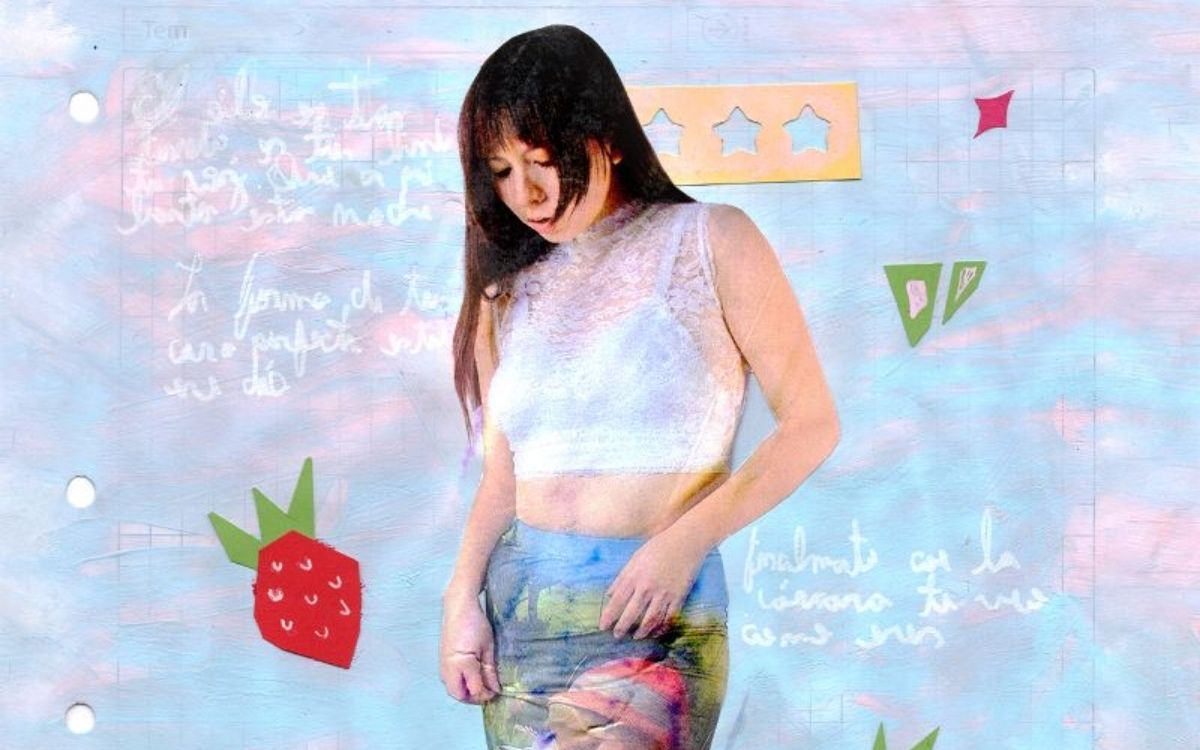
Kamiru came to art through a gap, an unexpected period of unemployment that opened just enough space for experimentation. What began as mixed media work posted online, without strategy or plan, quickly found an audience that crossed borders and generated commissions before a career had even been consciously considered. The studio that grew from that moment, built on frame-by-frame hand-made animation and an increasing commitment to analog processes like cyanotype, is now a deliberate act of resistance: against the instant, against the shortcut, against a world that wants everything produced without the mess of human hands. Slow, material, and honest about its own making, this is a practice that values the journey as much as the finished frame.
Can you pinpoint a single moment in your life when you realized art was not just a passion but your purpose?
My career didn't start with a grand plan, it started during a period of unemployment. Having that forced gap in my schedule gave me the space to experiment with mixed media. I began posting my work online, and almost immediately, it went viral. For the first time, I was getting messages from people outside my country who wanted to commission me because they liked my specific aesthetic. It was eye-opening, but I still didn't feel I had enough stability to call myself a full-time freelancer. To play it safe, I took a 9-to-5 office job. It was a standard, monotonous position that gave me the steady paycheck I thought I needed. But while I was at my desk, my phone wouldn't stop buzzing. People were still calling me for commissions, and I realized that if I actually put more effort into promoting my work, I could turn it into something bigger.
The definitive moment was when I did the math. I realized that a single mixed media commission was paying me more than my entire monthly salary at the office. I was spending eight hours a day on someone else’s business when my own project was already outperforming it. That was the moment I stopped seeing art as a side project and started seeing it as my actual career. I decided to trust the demand that was already there. I quit the office job to focus entirely on my studio, 'Kamiru,' and I haven't looked back since. I’d rather deal with the stress of my own creative deadlines than the boredom of an office that didn't fit my potential.
How do you reignite creativity during those inevitable periods of self-doubt or stagnation?
To be honest, I just keep going. I don't wait for a 'magical' moment of inspiration. If I’m working on a client project, I have to be my own biggest supporter. Since I’m usually alone in my studio during those times, I have to have these deep conversations with myself to stay confident. I tell myself that I’ve done this before and I can do it again. When it's a personal project, I’m a bit more relaxed. I let myself take breaks and step away from the screen for a while. But I have a rule: I always finish what I start. I really hate leaving things halfway. Even if I’m doubting the piece or feeling stuck, finishing it is my way of moving past the block. For me, the best way to beat self-doubt is simply to see the project through until the end.
How does your art engage with or comment on pressing contemporary issues, social, political, or environmental?
Most of my work is done by hand, frame by frame. Lately, I’ve been getting into cyanotype and analog processes because I really value the time it takes to make something real. We’re in a moment where AI is everywhere, and a lot of people are using it to take shortcuts. I don’t really believe that AI-generated art is 'real' art in the traditional sense. Sure, it’s a cool tool to get ideas, but it shouldn't be the final result. For me, making things by hand getting my hands dirty with chemicals or paper is my way of resisting that trend. It’s a statement that says the human process still matters. Doing things the 'slow' way in a world that wants everything 'instant' is how I stay true to what I believe.
How do you measure the impact of your work, by its reception, its personal meaning, or something else?
This is a tough one because, honestly, I often measure my success by how many likes my animations get. Since social media is how I connect with my clients and show my work to the world, it’s hard not to care about the numbers. When a video goes viral, I feel like I’m doing a good job. But I know that has a downside. It’s so easy to start comparing yourself to other artists who have millions of followers and feel like you’re not doing enough. It can be a bit of a rollercoaster for your mental health, if I’m being real. But at the end of the day, those numbers are also what allow me to keep doing this as a job, so I try to find a balance between the stats and what the work means to me personally.
In a world flooded with imagery, what responsibility do artists have to stand out and say something authentic?
I think the best way to be authentic today is just to tell your true story. We see so many 'perfect' final products every day that people are starting to get bored of them. That’s why I think the behind the scenes is so important now. In my case, I’ve noticed that people often enjoy seeing my process, the mess, the mistakes, the physical materials even more than the finished animation. People want to know the human behind the screen. I think our responsibility as artists is to show that journey and be honest about how we make things.
Can art be truly therapeutic? Have you experienced its healing power personally, or seen it impact others?
It’s a mix of both. When I first started with mixed media, it was 100% therapeutic. There was no pressure, no clients, just me experimenting and having fun. It was the most relaxing thing in the world. But when your passion becomes your job, that changes. Sometimes I feel a lot of pressure to deliver something amazing on a tight deadline, and that’s definitely not relaxing! But even when I’m stressed out, I always tell myself: 'I’d much rather be stressed about my art than stressed in an office. Even with the deadlines and the insecurities, I’m grateful that I get to do this. Art might not always be 'relaxing' now that it's my career, but it’s still the thing that makes me feel most like myself.
What artistic “superpower” would you choose to have, and how would it shape your work?
I would definitely choose the superpower of 'fast learning.' Sometimes, software like TouchDesigner, After Effects, or Blender can be a huge headache. You have these amazing ideas in your head, but then you spend hours just trying to figure out how to make the program do what you want. If I could learn those tools instantly, I could spend all my time on the creative side instead of the technical struggle. Once you master the tools, you’re free to create anything. That superpower would let me bring my analog, hand-made style into the digital world even faster and more efficiently.
Kamiru is an artist who keeps going, through self-doubt, through tight deadlines, through the rollercoaster of measuring worth in likes while knowing that the numbers are not the whole story. The rule is simple and consistent: always finish what you start. That discipline, combined with a genuine belief that the human process still matters in an era saturated with generated imagery, gives the work its particular quality of presence. The behind-the-scenes, the mess, the chemicals and paper, these are not incidental but central. What Kamiru is making, frame by careful frame, is an argument that the slow way is worth it.