
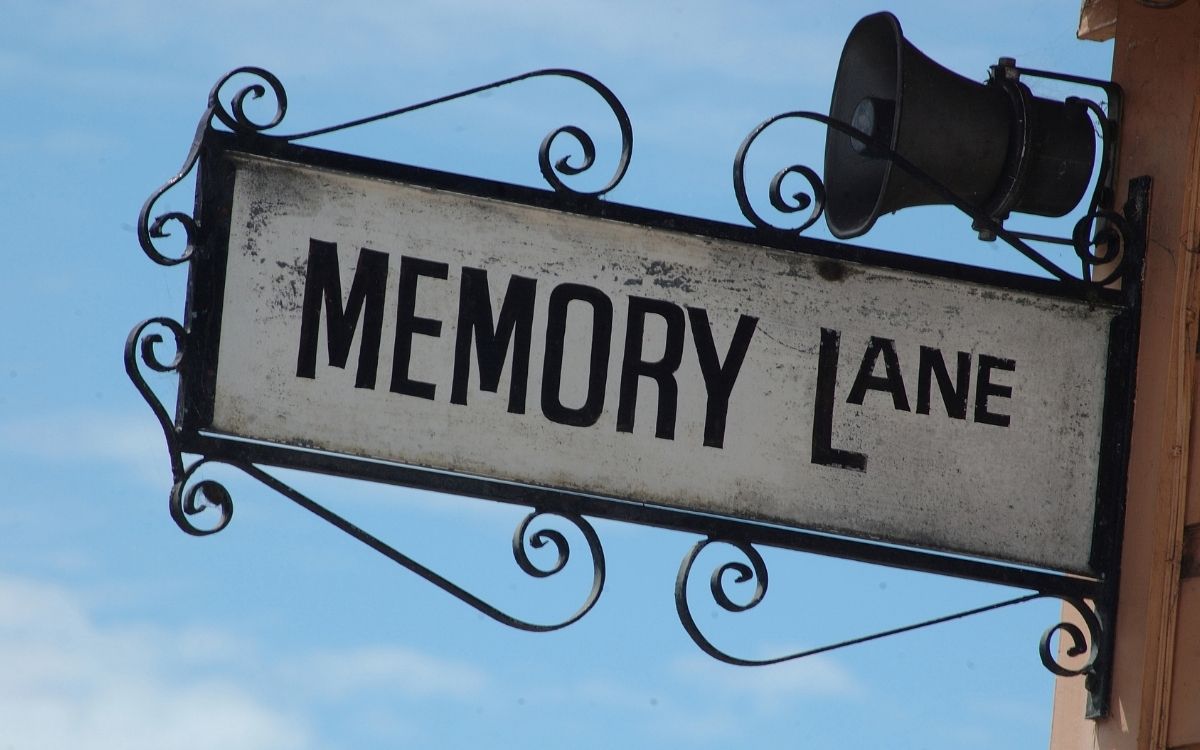
The stories that hold our communities together are stored in the most fragile place imaginable: human memory. And time is running out to save them.
There is a particular kind of knowledge that has no Wikipedia page. It lives in the memory of an older woman who remembers how the square in her neighbourhood looked sixty years ago, or in the hands of a grandfather who knows which path through the hills was used long before the road was built. This knowledge doesn't get uploaded. It doesn't trend. And unless someone younger bothers to ask, it fades quietly and permanently from the world.
The silence between generations
We live in an age obsessed with connectivity, and yet the distance between generations has rarely felt wider. Young people scroll through algorithmically curated realities while older adults often navigate digital life alone, uncertain where to start, and rarely invited to participate. The result is a slow, invisible kind of isolation, not dramatic enough to make headlines, but felt deeply in living rooms and community centres across the continent every single day.
What's lost in that silence is harder to measure than a statistic but easier to feel. A neighbourhood's character. The reason a particular street was once the heart of a town. The faces behind a photograph that no one alive can identify anymore. Cultural memory is not abstract; it is alive in the people who carry it, and those people are not here forever.
The simplest solution we keep overlooking
The answer, it turns out, has been in front of us all along. Not a new platform, not a policy document. Just the simple, quietly radical act of putting different generations in the same physical space, a park, a street corner, a local market and giving them a genuine reason to pay attention to one another.
In practice, this can look surprisingly ordinary. A group of seniors and teenagers walking through their town together with cameras. An older adult pointing out a building that most people pass without a second glance, explaining what it once was, who gathered there, and why it mattered. A young person helping to photograph it, upload it, and pin it to a digital map that others can find and explore. Small gestures and yet, accumulated over time, they become something much larger: a living record of a place told by the people who actually know it.
What makes this exchange work is that neither side is doing the other a favour. The senior is not a passive recipient of digital tutoring; they are the expert in the room, the only person who knows why that crumbling building on the corner once mattered, or what this street felt like when it hummed with a different kind of life. Their confidence with technology grows not from sitting through a workshop, but from having something worth saying and a reason to say it. And the young person gains something that no curriculum reliably delivers: a felt sense of place, of continuity, of the human texture layered into the streets they have always taken for granted. Intergenerational learning, when it is grounded in real places and real stories, tends to stick precisely because it cannot be separated from lived experience.
What gets left behind...in the best way
What remains after these encounters is real and lasting, too, not goodwill alone, but something you can return to. Interactive maps that residents can explore and keep adding to. Archives of photographs and voices anchored to specific streets and squares. Resources that educators can carry to other towns, other communities, other countries facing the same quiet erosion. These are not feel-good gestures. They are a form of infrastructure, built not from concrete, but from the collected memory of people who were, for once, asked to share it.
Every community has an archive that was never written down. The question is whether we choose to open it before it closes on its own.
The themes explored in this article, intergenerational connection, digital inclusion, and the preservation of local cultural memory, are at the heart of the LEGENDS project (2025-1-IT02-KA220-ADU-000352101), an initiative co-funded by the Erasmus+, working to build bridges between older adults and young people across Europe.