

What happens when a generation of designers graduates fluent in aesthetics but untrained in sustainability?
This is not a hypothetical; it is the gap a new transnational research effort set out to measure.
Europe's climate targets, from the Green Deal to the New European Bauhaus, assume that the people shaping our built and visual environment are equipped to act on them. Design schools are where that capacity either gets built or doesn't. Most curricula were written before either framework existed.
ARTIT spent the past months, together with a group of European partners, trying to find out how wide that gap actually is and what would close it. The result is a transnational report on how sustainability values are, or aren't, making it into Art & Design higher education across Europe.
Mapping the Gap
The research had a clear brief: assess how far Sustainable Development Goals, New European Bauhaus principles, and Green Deal thinking have actually entered Art & Design courses, and identify what students, graduates, educators, and working professionals still need in order to design differently.
To get there, the team combined desk research into academic programs and policy with a survey that drew over 370 responses across all partner countries, backed by focus groups and industry workshops with students, educators, and practitioners. What came back was less a single verdict than a set of fault lines, between who knows what, who wants what, and what's actually being taught.
Known and Unknown
Educators, it turns out, are largely up to speed. Students and recent graduates are not, particularly on the New European Bauhaus, which is younger as a framework and hasn't yet worked its way into how courses are built or taught.
That asymmetry matters. An educator who understands the frameworks but isn't teaching them, and a student who's expected to apply them without ever having encountered them, are two sides of the same structural problem, one that no single workshop or elective is going to fix on its own.
Short, Flexible, Real
Across every group surveyed, the same preference kept surfacing: shorter, modular, time-flexible formats. Micro-credentials, specifically, are a way to build sustainability skills without signing up for another full degree.
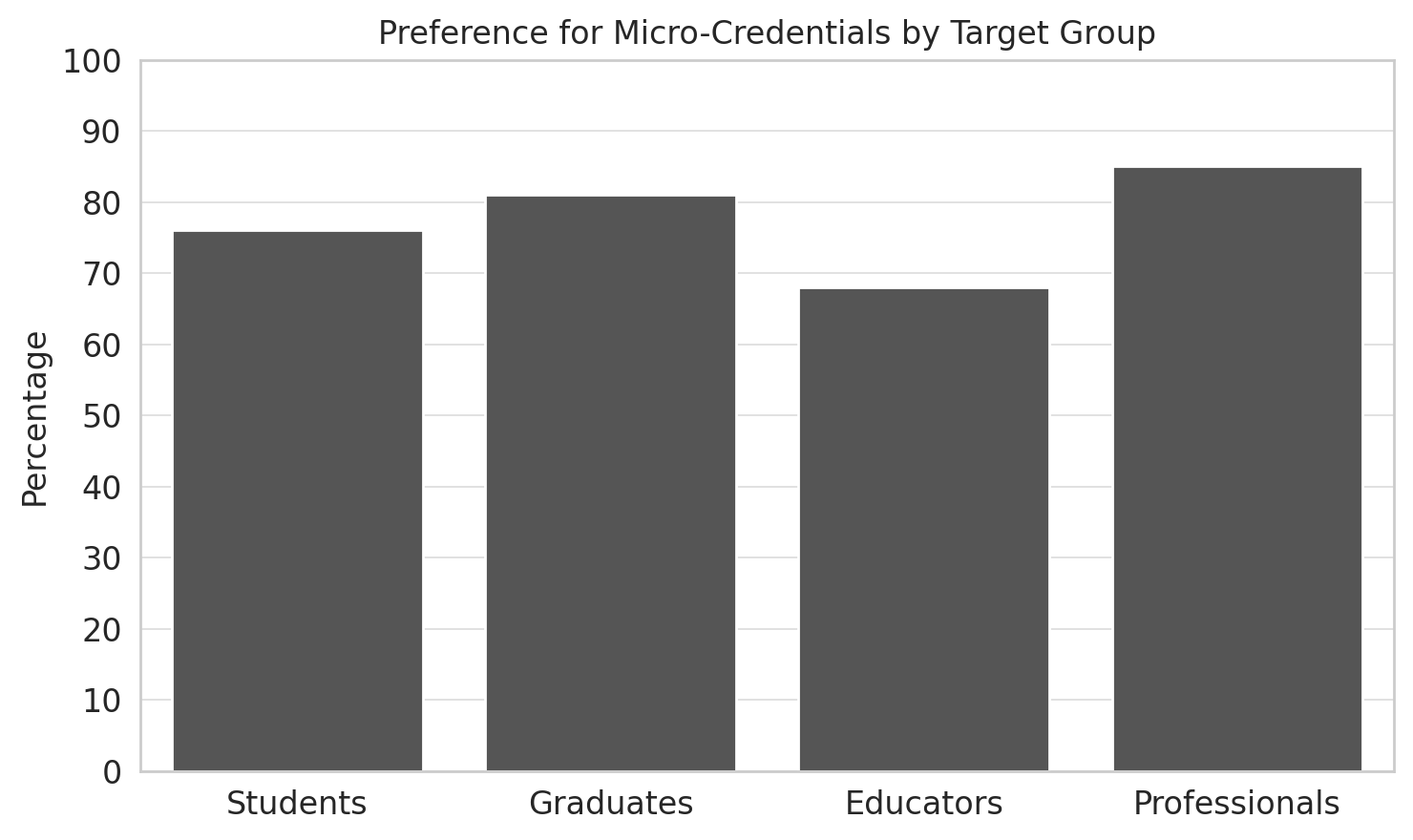
For working professionals already inside design practices, this is close to the only realistic entry point. Nobody mid-career is pausing to re-enroll in a four-year program to learn about circular material sourcing.
What Needs Teaching
Ask people what they actually want to learn, and the answers cluster fairly tightly: circular design and cradle-to-cradle thinking, material reuse and sustainable sourcing, biophilic and inclusive design, and social equity and well-being as design considerations rather than afterthoughts.
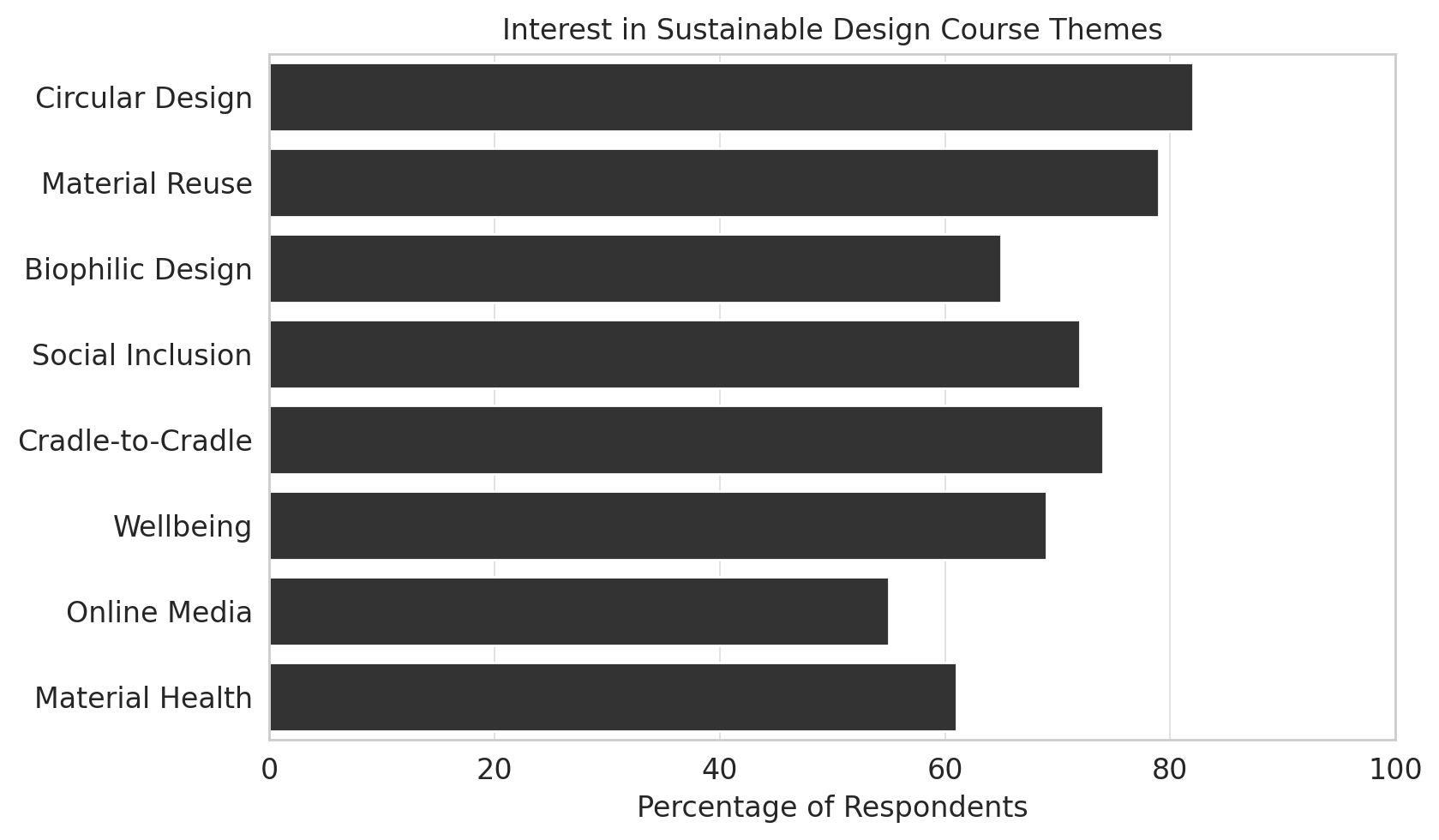
None of these are fringe topics. They're the areas the report found most underrepresented in current curricula, which suggests the demand is already there, waiting for the coursework to catch up.
Beyond the Studio
The report's least conventional finding is also its most practical: the studio, as a physical and pedagogical space, isn't sufficient anymore. Public spaces, green spaces, online platforms, and transdisciplinary settings all showed up as places where students and professionals want to be tackling real design problems.
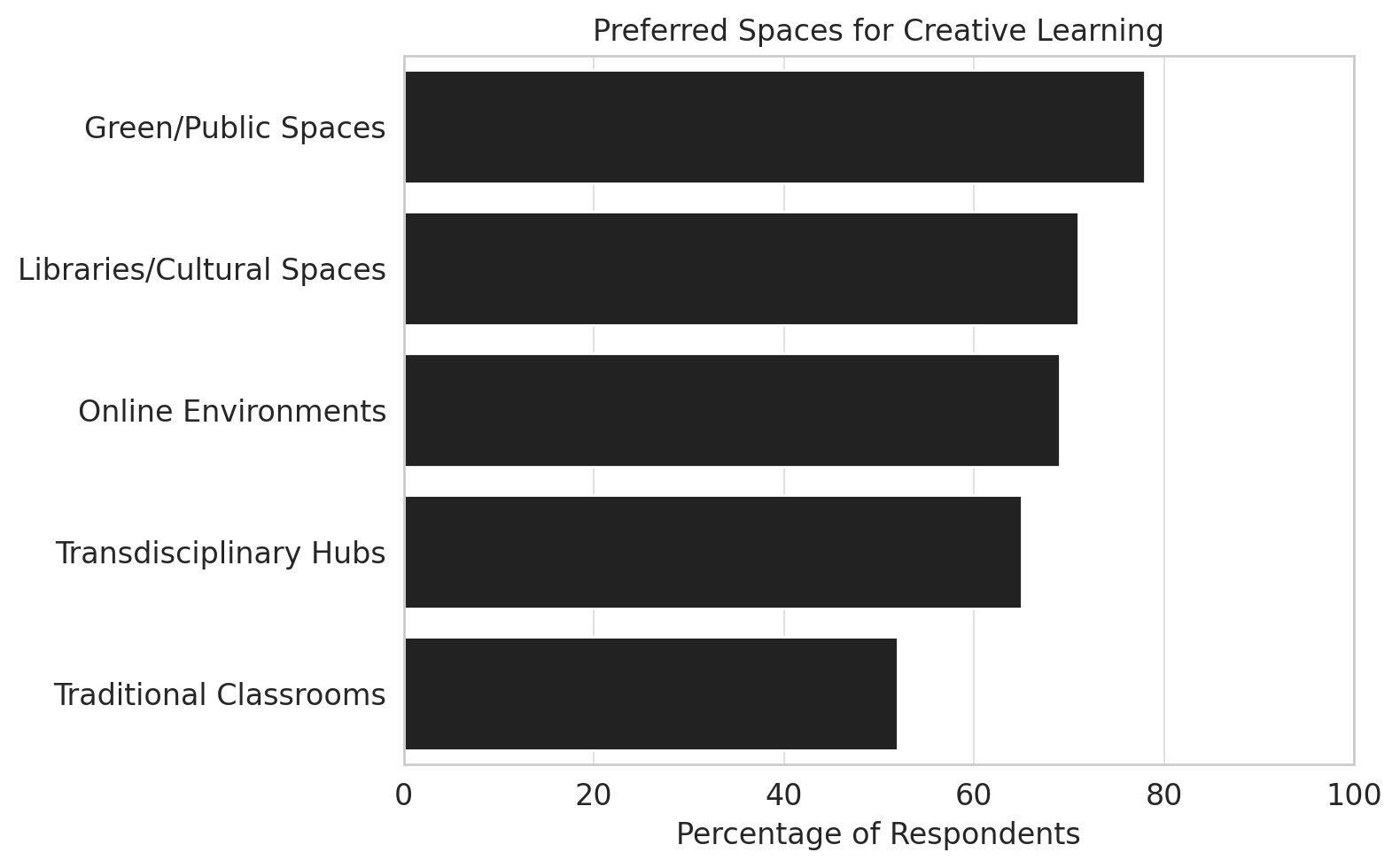
That lines up closely with what the New European Bauhaus is actually asking for, inclusion, participation, and aesthetics treated as inseparable, not as a design brief handed down after the fact.
None of this data is asking design education to add a sustainability module and call it done. It's describing a structural mismatch, between what students want to learn, what the built environment now demands, and what most programs are still built to teach. Closing that gap is slower and less photogenic than any single course redesign, but it's the actual work.
This work is part of the Futures Designed project, co-funded by the European Union under the Creative Europe programme, supporting the development of sustainability-focused learning tools and strategies for Art & Design higher education across Europe.
If you're working on something similar, get in touch, especially if you're already rethinking what a design classroom should look like.